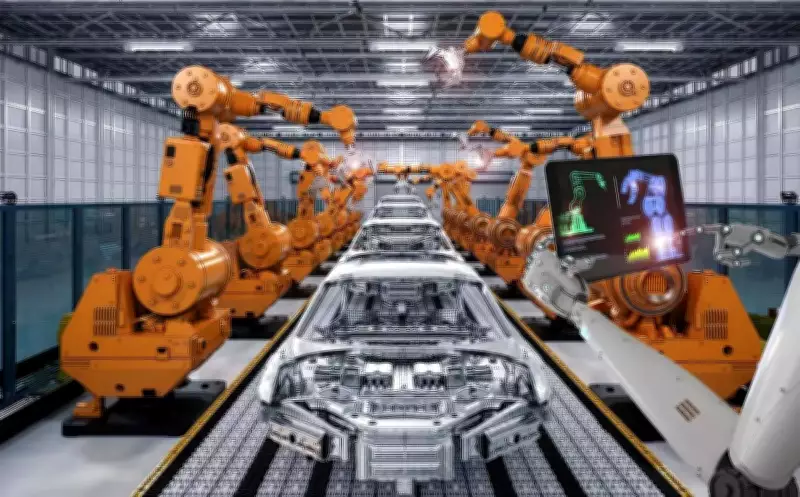
Kuka Redirects Focus to Asia and US Amid Europe's Slow AI Adoption
European robotics manufacturer Kuka is reportedly shifting its strategic focus toward Asia and the United States. This significant move comes as the company, one of the largest industrial robot makers globally, expresses dissatisfaction with the sluggish pace of artificial intelligence (AI) adoption across Europe.
Challenges in European Industrial Modernization
In an interview with Bloomberg, Kuka CEO Christoph Schell highlighted that many industrial companies in Europe are slow to modernize, relying heavily on legacy systems and implementing only gradual upgrades. This reluctance could severely impact their ability to compete with global peers. Schell noted that this trend is particularly evident in Germany, where numerous companies, especially in the automotive sector, still view digitization and automation as temporary phases.
"In Germany, a lot of companies still believe this is just a temporary thing, we're going to come back out of this, in particular in automotive. The problem is that many competing products are not only cheaper but also better," Schell stated.

Market Pressures and Investment Shifts
Schell elaborated on the competitive landscape in Europe, explaining, "The problem in Europe is there are so many companies that are fighting right now for fewer opportunities. It's almost like who is more desperate today? Who is willing to lose 20%, 30% gross margin?" Kuka, which counts major European automakers like BMW AG and Stellantis NV among its key clients, operates in a region where demand has remained subdued since the pandemic.
Consequently, the company is actively exploring investment opportunities in other markets. Schell pointed out that the US is attracting more investment due to import tariffs that encourage domestic manufacturing. Additionally, markets such as China, India, and Southeast Asia are experiencing robust growth driven by rapid technology adoption and extensive infrastructure development.
Background and Industry Context
Kuka, acquired by China's Midea Group Co in 2016, provides industrial robots to prominent companies including Volkswagen AG and Airbus SE for production line operations. The acquisition of the Augsburg-based firm, which generates approximately €3.9 billion ($4.5 billion) in annual revenue, sparked debates in Germany about foreign investment in key industries. Following this, the German government increased scrutiny of technology-related acquisitions, particularly in robotics.
Originally starting as a manufacturer of mechanical devices, Kuka has expanded into software engineering and AI development while continuing to produce industrial robots for factory use. Its competitors include ABB Robotics and Japan's Yaskawa Electric Corporation. Recently, Kuka introduced a platform aimed at integrating "hardware-defined, software-defined, and AI-defined" manufacturing, as Schell added.
Broader Economic Challenges in Germany
The report also noted that Germany's economy has been grappling with prolonged weak growth. While recent public spending plans on defense and infrastructure showed early signs of improvement, the situation has been further complicated by the recent Middle East conflict. Export-oriented industries such as automotive, machinery, and chemicals, including BASF SE, continue to face significant challenges from high energy and labor costs.
This strategic pivot by Kuka underscores the growing global competition in robotics and AI, highlighting the urgent need for European industries to accelerate their digital transformation efforts to remain competitive on the world stage.