

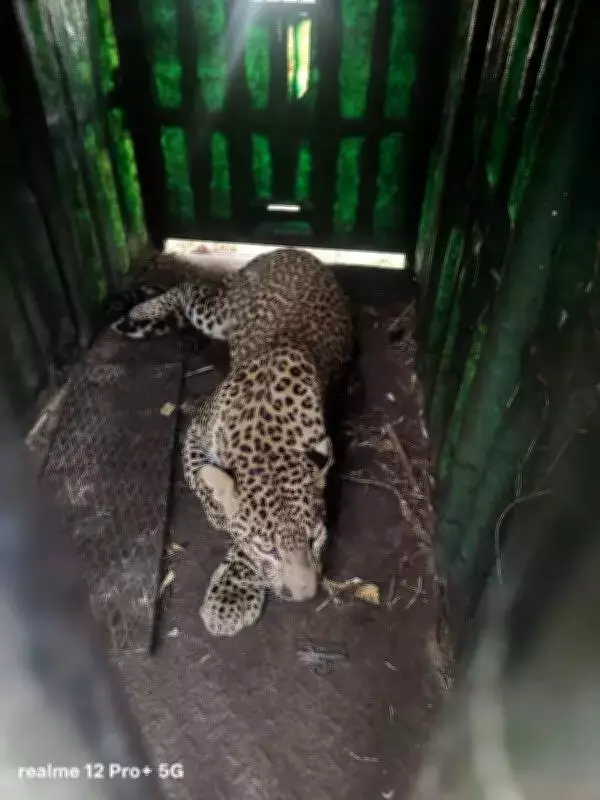
Leopard Resurgence Sparks Renewed Fear in Pune's Pimparkhed Village
Residents of Pimparkhed village in Shirur tehsil, approximately 100 kilometers from Pune, are experiencing renewed anxiety and fear following fresh sightings of leopards and the capture of five big cats over the past two weeks. This alarming development comes barely four months after three fatal leopard attacks in the area, despite intensified efforts by forest officials to track and capture the animals.
New Leopards Fill Vacated Territories
Reportedly, new leopards have moved into the region and occupied territories that were vacated following earlier capture operations. Although forest officials describe this as a natural behavioral pattern among leopards, it signals a return to anxiety and uncertainty for the villagers who had hoped for lasting relief from the predator threat.
Pimparkhed stands on the boundary between Ambegaon and Shirur tehsils. Last year, a series of leopard attacks claimed three lives, including that of a school student. The tragic incidents prompted angry residents to stage a protest on the Pune-Nashik highway near Manchar, blocking vehicular movement for several hours. The agitation was only called off after district administration intervention and assurances from the state government and Forest Minister Ganesh Naik.

Following those attacks, the forest department launched an intensive trapping operation that resulted in the capture of 37 leopards in less than four weeks, including one suspected man-eater.
Officials Explain Territorial Dynamics
Assistant Conservator of Forest for the Junnar division, Smita Rajhans, explained the current situation: "Pimparkhed is a classic example of how quickly leopards occupy new territories. As soon as the earlier animals were removed, others sensed an opportunity and moved in. This is the reason for fresh sightings in the village."
Rajhans further elaborated on leopard behavior: "Leopards are highly territorial animals. They mark their territory by urinating, scratching trees, and leaving other signs. These markers signal their presence to other leopards. When an animal is captured, these signs disappear and a vacuum is created. Other leopards detect this quickly and claim the territory. This is exactly what has happened in Pimparkhed."
Ideal Habitat for Leopard Population
The region's unique landscape makes it particularly conducive for leopard habitation. Officials describe the island-like cluster of around 17 villages in Shirur tehsil, known locally as the bet region, as a distinctive geographical feature. Pimparkhed and surrounding villages are dotted with water bodies and vast stretches of sugar cane fields and agricultural land that provide dense cover and easy access to prey.
"The region has evolved into a prime leopard habitat over the last decade," explained a forest official. "It's a hotspot for leopard activity. Frequent sightings in farms are common and present a constant challenge for both villagers and wildlife authorities."
Village Leader Expresses Concern
Pimparkhed Sarpanch Narendra Dhome expressed the community's growing concerns: "Sightings have increased in our village and the surrounding ones. New leopards have come in and will impact our lives like last year. Forest officials should keep a close watch and take measures immediately. It is evident now that capturing alone is not a viable solution to this ongoing problem."
Current Response Measures
Forest officials have resumed active trapping and monitoring operations in the village while urging villagers to remain cautious. Awareness campaigns and precautionary measures are being reinforced to minimize the risk of further conflicts between humans and leopards.
The situation highlights the complex challenge of managing wildlife in areas where human settlements intersect with natural leopard habitats, requiring ongoing vigilance and adaptive management strategies from both forest authorities and local communities.






