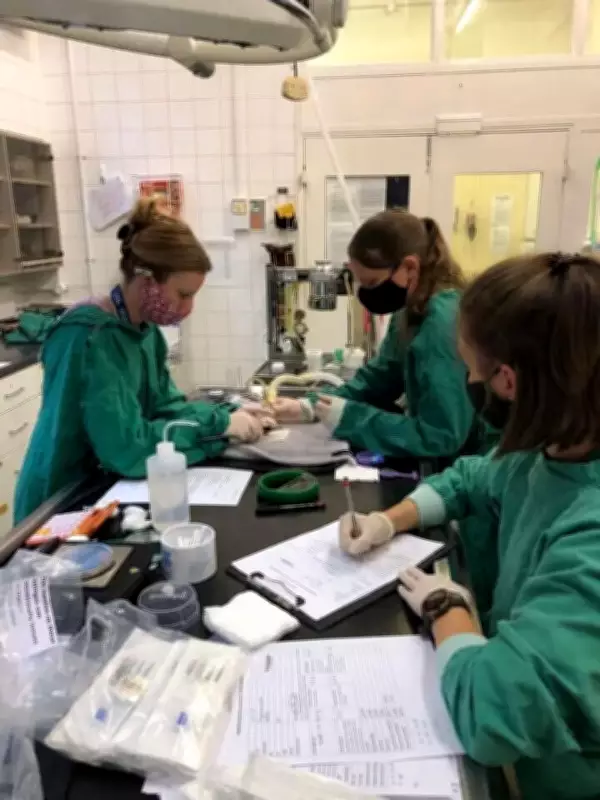
Consider entering through the iconic gates of the oldest scientific zoo in the world, where the image before you is not one of a sleepy tiger lounging behind glass but a high-stakes, life-altering medical procedure taking place behind locked doors.
The most critical, cutting-edge work done at the London Zoo takes place out of the public eye, in private clinics where veterinarians carry out miracles on everything from small tree frogs to large silverbacks. This is about to change with an unprecedented £20 million gift that goes unnamed.
Not only is this massive donation a stroke of luck for all animal lovers, but it marks a new era in conservation efforts around the globe. According to the ZSL, the funds will be used to build a state-of-the-art wildlife health centre, where spectators will have an opportunity to observe the process firsthand as researchers treat the patients. It is a daring move that completely changes the role of the zoo-goer from an observer to a scientist.

Two Hundred Years of Tradition Backed by Modern Medicine
It may seem like fate that in the year when ZSL celebrates two centuries of existence, it looks back on its history of groundbreaking discoveries that played a significant part in shaping our understanding of nature. Since its establishment, ZSL was more than just an exotic petting zoo – it was a legitimate research facility, and the opening of a new wildlife hospital seems like the logical continuation of the organisation’s legacy.
In the article World’s First Scientific Zoo, ZSL scientists review the evolution of their objective from mere exhibition of animals to active protection of the well-being of our planet. The new facility will become the epitome of this mission. By providing visitors with a glimpse of wildlife medicine, the zoo removes the barrier between “us” and “them.” The visitors will have the opportunity to learn about the difficulties involved in diagnostics and the successes achieved in surgery.
This initiative marks a new era in conservation, merging tradition with modern medicine to foster global responsibility and inspire future scientists by demystifying wildlife healthcare.
Such openness is intended to inspire the curiosity of future researchers. After seeing how a veterinarian conducts an ultrasound on an exotic reptile and treats a pangolin, one realises that wildlife health is not an abstraction but something very tangible and relevant. Even a weekend spent with a family can become an actual lesson in global responsibility. And the generous anonymous donation helps to ensure that the ZSL Institute of Zoology remains ahead of others in its quiet battles against extinction.
One Health for the Future
The excitement that comes after watching an operation conducted on a lion is accompanied by a scientific purpose behind it all. We live in an era in which the health of humans and animals is inextricably linked. The majority of novel diseases in humans are actually derived from wildlife. Therefore, a hospital focused on studying such creatures performs a crucial duty.
The impact of this funding is detailed in a report regarding the £20m Boost for Wildlife Health, which emphasises how this investment will tackle the dual crises of wildlife disease and biodiversity loss. This research is part of the "One Health" approach, a concept that recognises that we cannot have healthy humans on a sick planet. By diagnosing and treating animals at the zoo, scientists are able to gather data that helps them track pathogens in the wild.
This new facility will allow for even more sophisticated research into how viruses move between species. Every blood sample taken and every recovery monitored contributes to a global database used by health organisations worldwide. The ZSL feature on Vets and Vet Care highlights that the expertise of these professionals is often called upon in remote corners of the world, from the African savannah to the tropical forests of Southeast Asia.

Therefore, through an anonymous gift, there is a worldwide project that becomes a local hospital in nature. It provides space for the best brains of medicine and science to come together, do research, and exchange ideas. Everyone loves to experience the thrill of learning, but the underlying goal always remains the same, which is the protection of life’s delicate balance here on earth. With London Zoo’s 300-year history drawing to an end, the future hospital becomes a legacy to the power of charity and science.