

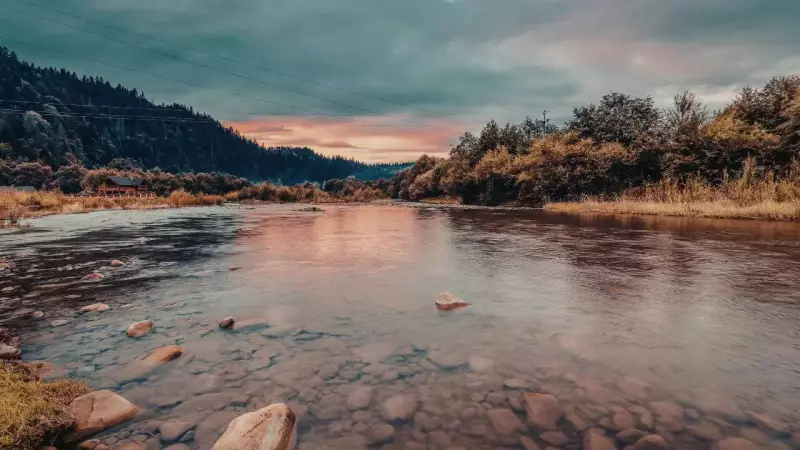
Rivers typically serve as the lifeblood of civilizations. They carve canyons, irrigate fields, and sustain entire ecosystems. However, in western India, one river defies this norm. Originating in the arid landscapes of Rajasthan, it vanishes mysteriously into the lands of Gujarat. Unlike perennial rivers that flow steadily into seas or lakes, its path is shaped by climate, geography, and historical factors.
The Luni River: A Unique Waterway in Western India
The Luni River stands out as an extraordinary feature in remote western India. It begins its journey in the Aravalli ranges of Rajasthan, near the famous town of Pushkar. This area is renowned for its hills, temples, and scenic beauty. From there, the river meanders southwest across Rajasthan's flat terrain, flanked by sandy banks. Notably, its waters often turn salty due to limited flow in certain sections.
What truly sets the Luni apart is its endpoint. Instead of emptying into an ocean like most rivers, it simply disappears. As it enters Gujarat, the water soaks into the soil or evaporates under the intense sun. It fades into the sand without forming a delta or river mouth, creating an almost eerie spectacle.

Why the Luni River Disappears: Geography and Climate at Play
Rajasthan and parts of Gujarat experience a semi-arid climate. Rainfall is scarce, and temperatures soar. As the Luni flows through sandy soil and dry plains, water seeps underground or evaporates rapidly. Human activities like irrigation further reduce its volume. With insufficient flow to maintain a continuous course, the river gradually withers away.
This phenomenon highlights how geography and climate dictate river behavior, especially in arid zones where water is precious. The Luni's fate underscores the challenges of water conservation in dry states.
Is the Luni River Truly Vanishing or Just Going Underground?
The Luni does not disappear with a dramatic splash. Much of its water sinks out of sight, seeping into soil layers. In many areas, this hidden flow replenishes groundwater, which people later extract via wells or borewells. So, while the river seems to stop abruptly, it actually transforms. This reminds us that rivers don't always end visibly; sometimes, they simply change form beneath the surface.
Industrial Pollution's Impact on the Luni River
Water quality in the Luni has deteriorated significantly due to industrial pollution. Fabric manufacturing units along its banks dump hazardous materials, disrupting natural flow and turning freshwater saline. This pollution affects not only the river but also nearby ground and surface water sources, compounding environmental challenges.
Rivers That Don't Reach the Sea: Is Luni Alone?
The Luni is not the only river with such peculiar behavior. Globally, many rivers dry up before reaching an ocean, common in arid and semi-arid regions where high heat and low rainfall cause rapid evaporation or seepage. These are known as inland drainage rivers. In India, the Luni remains one of the most prominent examples, showcasing the vast hydrological diversity of the subcontinent.
By tracing the Luni's course and observing its strange behavior, we gain fascinating insights into water dynamics in dry lands. This river's journey from origin to disappearance offers a compelling narrative about nature's adaptability and the pressing need for sustainable water management in India's arid zones.






