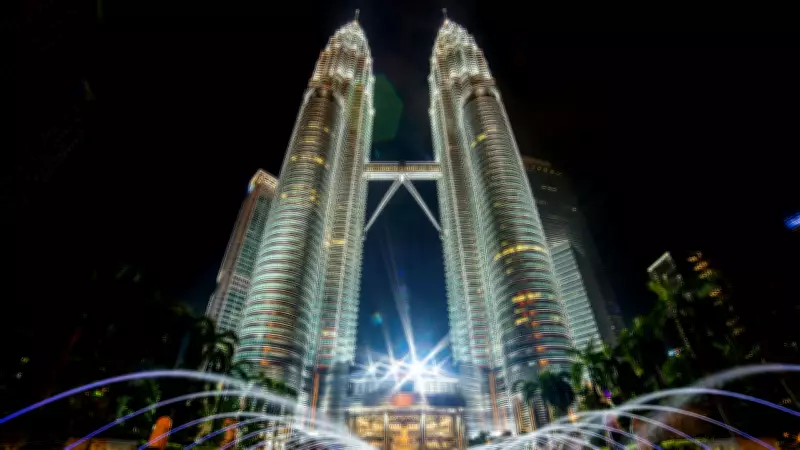
The Unconventional Strategy Behind Malaysia's Petronas Twin Towers
When Malaysia embarked on the ambitious Petronas Twin Towers project during the 1990s, authorities implemented a groundbreaking approach that would become legendary in engineering circles. Rather than awarding the entire project to a single contractor, the Malaysian government deliberately divided the work between two competing international consortia—one led by Japan and the other by South Korea.
The Genesis of a Strategic Division
Malaysia's decision to split the monumental project stemmed from practical considerations rather than mere spectacle. With an aggressive construction timeline established, assigning each tower to a separate consortium enabled simultaneous progress on both structures. The Japanese-led team, spearheaded by Hazama Corporation, assumed responsibility for Tower 1, while the South Korean consortium, led by Samsung C&T, took charge of Tower 2.
This parallel construction methodology significantly minimized potential delays and ensured that setbacks on one tower would not impede the entire project's advancement. Beyond logistical efficiency, this arrangement naturally fostered an environment where comparison became inevitable. Two exceptionally capable teams were working adjacent to each other on nearly identical architectural marvels, creating fertile ground for competitive dynamics.

The Emergence of an Unofficial Race
Although no formal directive mandated a competition, a powerful competitive spirit rapidly materialized on the construction site. Engineers and workers from both consortia remained acutely aware of each other's progress, with national pride serving as a potent, unspoken motivator. Construction schedules intensified dramatically, featuring continuous work cycles and round-the-clock operations during critical phases like concrete pouring.
The South Korean-led consortium eventually gained a slight advantage, achieving key structural milestones ahead of their Japanese counterparts. Despite beginning certain phases somewhat later, the South Korean team managed to complete Tower 2 marginally faster—a detail frequently highlighted in historical accounts of this landmark project.
Engineering Precision and Monumental Challenges
Constructing twin skyscrapers with identical height and design presented extraordinary engineering challenges. Among the most complex elements was installing the skybridge connecting the two towers, which demanded near-perfect alignment in both vertical positioning and horizontal orientation.
Even minor discrepancies required meticulous correction to guarantee structural integrity and safety. Adjustments implemented during construction addressed slight variations between the towers, highlighting the exceptional precision necessary for such a high-profile international undertaking.
Assessing the Rivalry's Impact on Construction Pace
The popular narrative suggesting that rivalry dramatically accelerated construction contains substantial truth, though sometimes slightly exaggerated. The dual-consortium model primarily aimed to meet stringent deadlines through parallel execution rather than fostering competition.
Nevertheless, the presence of two competing teams undoubtedly introduced an additional motivational layer. The pressure to outperform rivals, combined with contractual obligations and potential financial penalties for delays, contributed significantly to maintaining an exceptionally rapid pace throughout the project's duration.
A Record-Breaking Architectural Achievement
Completed in 1998, the Petronas Twin Towers claimed the title of world's tallest buildings until 2004. Beyond their impressive height, these structures symbolized a new era of Asian engineering capability and ambition. The project demonstrated how strategic planning combined with world-class expertise could deliver extraordinary results on the global stage.
Today, the towers maintain their status as the world's tallest twin structures and remain defining features of Kuala Lumpur's iconic skyline.

The Enduring Legacy of an Engineering Marvel
The story of the Petronas Twin Towers continues to resonate as a paradigm of innovative project management. While the rivalry between Japanese and South Korean teams was never officially orchestrated as a competition, it became an integral component of the project's historical narrative.
Ultimately, these magnificent towers represent far more than architectural achievement. They embody how strategic collaboration, healthy competition, and meticulous planning can converge to create something truly enduring—transforming a bold vision into record-breaking reality that continues to inspire engineers and architects worldwide.