Myanmar's military government, which seized power in a 2021 coup, has conducted its first attempt at holding elections in specific parts of the country. This move is widely seen as an effort by the junta to claim a veneer of legitimacy for its rule, which has been met with fierce domestic resistance and international condemnation.
Limited Polls Amidst Widespread Conflict and Boycotts
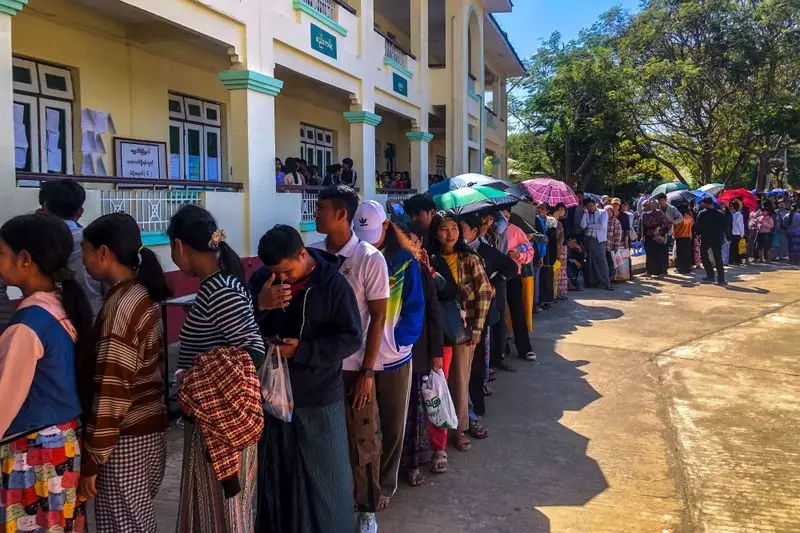
The elections, held for a small number of seats in regional and national parliaments, were not nationwide. Voting was restricted to areas where the military, known as the Tatmadaw, maintains firm control. The polls took place primarily in parts of Shan State, specifically in townships like Hopang, Hseni, and Namphan. These are the first elections organized by the State Administration Council (SAC), as the junta calls itself, since it overthrew the democratically elected government of Aung San Suu Kyi over three years ago.
The process was marred by a near-total boycott from major established political parties. The National League for Democracy (NLD), which won a landslide victory in the 2020 polls annulled by the coup, refused to participate. Other significant ethnic parties also shunned the election. This left the field open mainly to military-backed proxy parties and a handful of smaller groups, leading to a largely uncontested and predetermined outcome.

Security Threats and Armed Opposition Disrupt Voting
The junta's attempt to stage elections unfolded under the shadow of intense armed conflict. People's Defence Forces (PDFs) and various ethnic armed organizations, which control large swathes of territory, actively opposed the polls. Election officials and candidates faced direct threats, with reports of some being targeted or killed for their involvement. In many contested areas, the security situation was deemed too volatile for voting to proceed at all.
Resistance groups had called for a complete boycott, viewing participation in the junta's electoral process as treason. They urged civilians not to vote and threatened action against anyone facilitating the elections. This created an atmosphere of fear and intimidation, significantly depressing voter turnout even in areas where polling stations were open. International observers and independent media were absent, making verified assessment difficult, but reports from local sources indicate participation was extremely low.
Regional Implications and a Struggle for Legitimacy
The military's push for elections is a clear political strategy to counter its growing isolation. By creating a new parliament, even a heavily controlled one, the junta aims to present itself as a constitutional authority moving towards a disciplined democracy. However, analysts widely dismiss this as a sham intended for both domestic and international consumption. The Association of Southeast Asian Nations (ASEAN), of which Myanmar is a member, has largely sidelined the junta from high-level meetings following its failure to implement an agreed peace plan.
For neighboring countries like India and China, which share borders with Myanmar, the ongoing instability presents significant challenges. The conflict has led to refugee flows, disrupted trade routes, and allowed cross-border criminal networks to flourish. The junta's tightening grip through measures like these elections, rather than inclusive dialogue, suggests the protracted civil war and humanitarian crisis will continue, with serious implications for regional security.
The elections in Myanmar ultimately highlight the deep chasm between the military's quest for political validation and the reality on the ground, where a majority of the population and powerful armed groups reject its authority. The polls have done little to resolve the country's crisis and are likely to further entrench the divisions that have plagued Myanmar since the 2021 coup.