

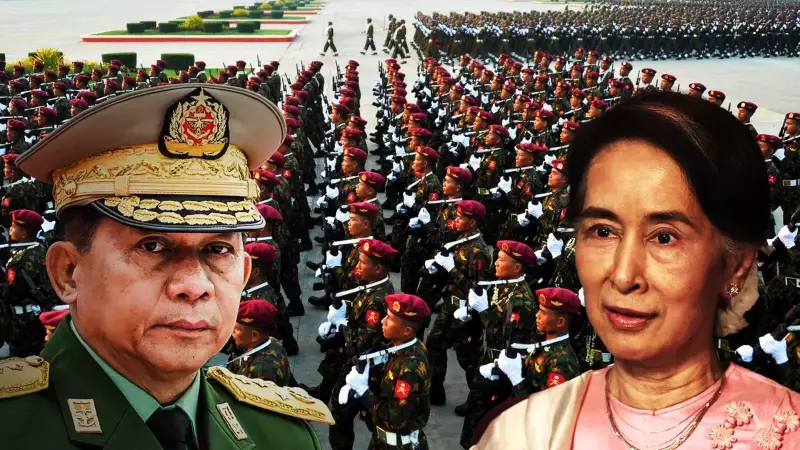
Myanmar has commenced a staggered general election, marking the country's first electoral exercise in half a decade. The polls are being conducted under the heavy shadow of an ongoing civil war and the firm control of the military, which seized power in a 2021 coup.
A Vote Under the Shadow of the 2021 Coup
The current electoral process is a direct sequel to the army takeover of February 2021, which abruptly ended the nation's fledgling democracy. The military, known as the Tatmadaw, removed the democratically elected government led by Nobel laureate Aung San Suu Kyi. That event triggered massive nationwide protests and, ultimately, a brutal armed resistance that has escalated into a prolonged civil conflict.
While the ruling junta frames this election as a significant step back towards a democratic system and normalised governance, a wide array of critics strongly disagree. They assert that the entire process is meticulously engineered and tightly controlled to ensure victory for political entities loyal to the military establishment.

Widespread Exclusion and Active Boycott
The credibility of the election is severely undermined by several critical factors. First, intense ongoing fighting between the military and various ethnic armed organisations as well as people's defence forces has made it impossible to conduct voting in numerous regions and constituencies. This effectively disenfranchises a large portion of the population.
Secondly, major opposition groups, including the National League for Democracy (NLD) which was ousted in the coup, have been either formally excluded from participating or have chosen to call for an active boycott of what they label an illegitimate process. This absence of key political players further strips the polls of genuine competitive meaning.
Rights Groups Warn of Escalating Tensions
International and local human rights organisations have issued stern warnings regarding the election. They highlight that a process conducted under martial law, with widespread censorship, imprisoned political leaders, and a climate of fear, cannot be considered free or fair.
These groups caution that the military's attempt to gain a veneer of electoral legitimacy through a managed vote is likely to backfire. Instead of stabilising the country, it risks further inflaming existing tensions and could lead to an intensification of the conflict. The election, therefore, is seen not as a solution to Myanmar's crisis, but as a potential catalyst for deeper instability.
The phased voting will unfold over the coming days, but the outcome is viewed by many analysts as a foregone conclusion, designed to secure the military's dominant role in Myanmar's politics for the foreseeable future.






