

India's river systems typically follow a predictable pattern. Most major rivers originate in the Himalayas or central highlands and flow eastward toward the Bay of Bengal. This fundamental geographical principle is taught early in schools and rarely challenged. However, one significant river quietly breaks this rule. Flowing through the heart of the country, this river moves in the opposite direction, traveling west before reaching the sea. Its course shapes landscapes, livelihoods, and belief systems along its path.
The River That Flows Backwards
The river that moves west instead of east is the Narmada. Measuring approximately 1,310 kilometers, it ranks as India's fifth longest river. Unlike prominent rivers such as the Ganga or Godavari, it does not travel toward the Bay of Bengal. From its source, it heads steadily westward and eventually meets the Arabian Sea. Only a few long Indian rivers exhibit this pattern. The Tapi River is another example. The notion of the Narmada flowing "backwards" exists primarily because most surrounding rivers flow in the opposite direction.
Origin and Journey of the Narmada
The Narmada begins at Amarkantak in Madhya Pradesh. This forested region is also recognized as a pilgrimage site. From this starting point, the river initiates its westward movement. It passes through Madhya Pradesh, briefly touches Maharashtra, and then enters Gujarat. Its journey concludes near Bharuch, where it empties into the Arabian Sea. Along its route, the river transforms in character. In certain sections, it cuts through hills and narrow valleys. In other areas, it widens and slows down. The upper stretches feel remote and untouched, while the lower sections appear more settled and cultivated.

Geological Reasons for Westward Flow
The direction of the Narmada is determined by geology. It flows through a rift valley formed by ancient tectonic activity. This valley slopes from east to west, and water naturally follows that gradient. The Vindhya Range lies north of the basin, and the Satpura Range lies south. Because the river travels through this rift, it behaves differently from many other rivers. It does not fan out into a broad delta. Instead, it forms an estuary where it meets the sea.
Landscapes Supported by the River
The Narmada basin encompasses diverse terrain. The upper regions are hilly and forested, with sparse human habitation. Moving westward, the land becomes flatter and more open. These plains are fertile and support extensive agriculture. Farming here depends heavily on the river. Common crops include wheat, pulses, and cotton. The river also provides drinking water. Over time, canals and reservoirs have expanded its reach. Towns and cities along the river rely on it for daily needs in quiet, consistent ways.
Dams and Development Projects
Several large dams have been constructed along the Narmada. The Sardar Sarovar Dam in Gujarat is the most widely recognized. Others include the Indira Sagar Dam and the Omkareshwar Dam in Madhya Pradesh. These projects generate electricity and supply water for farming and households. They have also altered the river's natural flow. Over the years, these developments have sparked debates concerning land, displacement, and environmental impact. These discussions persist today.
Natural Sites Along the Narmada
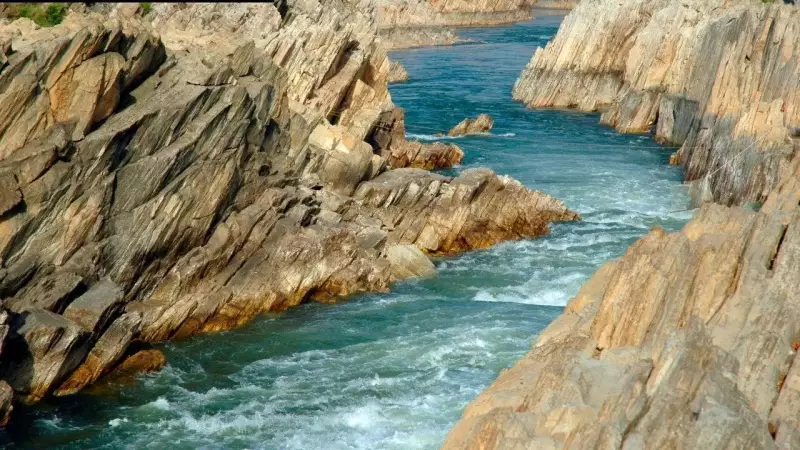
The river is associated with notable natural features. Near Jabalpur, it passes between tall marble cliffs known as the Marble Rocks. Nearby, the Dhuandhar Falls send water crashing down in a dense spray, especially during the monsoon season. These locations may not be vast, but they leave a lasting impression. The river here feels contained and powerful. The sound carries through the landscape, which holds the river in place.
Cultural and Spiritual Significance
For many people, the Narmada is more than just a river. Temples at Maheshwar, Omkareshwar, and Amarkantak attract pilgrims throughout the year. Some devotees undertake the Narmada Parikrama, a long journey along its banks. The river is revered as a living presence. Its course has remained constant for generations. Along its length, faith, settlement, and daily life continue to flourish around it.






