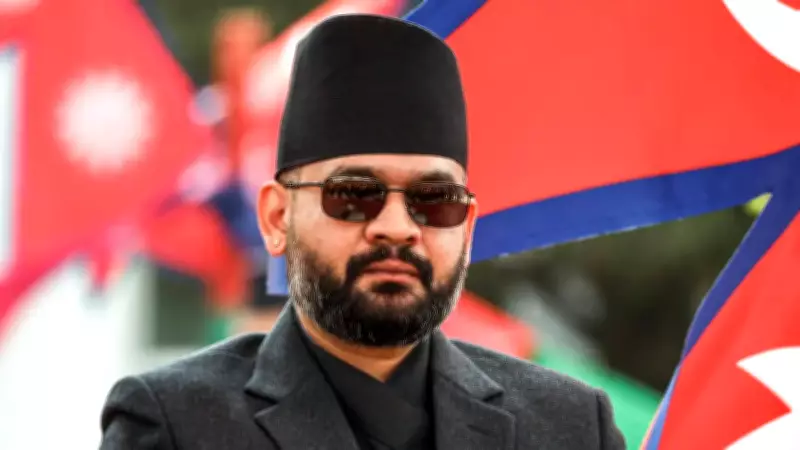
Nepal's newly appointed Prime Minister Balendra Shah is facing widespread public protests and anger after he remained absent from Parliament during a crucial discussion on the government's program and policy for the next fiscal year. Tensions escalated on Wednesday, ultimately leading to protests and walkouts by opposition lawmakers. The legislators chanted slogans inside the House, demanding the Prime Minister's presence. The opposition argued that he cannot avoid direct accountability on important national issues. The obstruction continued, disrupting proceedings in the House of Representatives.
Controversy Over Finance Minister's Response
The controversy took a major turn when it was announced that Finance Minister Swarnim Wagle would respond on behalf of the Prime Minister. Opposition leaders immediately criticized this move, arguing that it would weaken parliamentary tradition and democratic accountability. They insisted that the Prime Minister must personally address the House on such critical matters.
Background and Rise to Power
Shah rose to power following the GenZ movement in 2025 and became Prime Minister on March 5 of this year. Since his appointment, he has yet to address Parliament publicly. His repeated absence from the House has raised concerns about his commitment to democratic accountability. Shah's image was built as an anti-establishment outsider who took office during a wave of public frustration against Nepal's traditional political parties, years of unstable coalition governments, and corruption allegations. His party's success was seen as a new beginning for the country after the abolition of the traditional political class that dominated Nepal. However, Shah's absence in the House has prompted the opposition to warn of further parliamentary obstruction if he fails to appear.

Institutional Friction and Rising Unrest
Since coming to power, Shah's government has faced significant criticism over decisions that attempted to restrict activities linked to trade unions and student politics. These moves were later stayed by Nepal's Supreme Court, marking a major setback for the new government. According to political observers, this tension reflects a larger power struggle within Nepal's democracy. While sections of urban youth and anti-establishment voters support Shah, opposition leaders accuse him of ignoring institutional norms and relying on populist politics. Over the past decade, Nepal has witnessed frequent coalition collapses, constitutional disputes, and government changes. The recent Parliament controversy has added another layer of concern about whether this government can avoid another period of instability in the country's fragile political system.
Opposition Sharpens Attack
Opposition parties have accused Shah's government of disrespecting Parliament and democracy. The issue escalated further after Shah left Parliament midway during President Ram Chandra Poudel's address on the government's policy and program earlier this week. In defense of the Prime Minister, government allies responded by stating that parliamentary rules allow ministers to respond on behalf of the head of government. They accused the opposition of trying to corner the government before it has had a chance to settle into office. Shah entered office with a vision to challenge the old political culture, but the current situation paints a different picture from what was expected. With opposition parties now threatening further protests and disruptions inside Parliament, the political atmosphere in Kathmandu is expected to remain tense in the coming days.