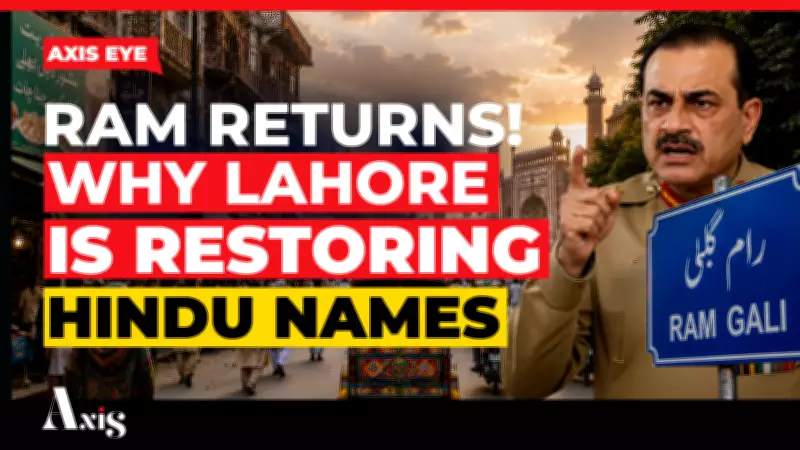
Lahore is witnessing a stunning historical reversal as Pakistan restores several pre-Partition Hindu, Sikh, and Jain street names that were erased after 1947. The move, approved by the Punjab government under a heritage revival project linked to Maryam Nawaz and Nawaz Sharif, has triggered intense debate over Pakistan’s identity and its treatment of minorities.
Restored Names and Their Significance
Rehman Gali is becoming Ram Gali again, Islampura is reverting to Krishan Nagar, while Babri Masjid Chowk is once again officially Jain Mandir Chowk. These changes symbolically reconnect Lahore with its multicultural past before the partition of India.
Supporters' Perspective
Supporters of the move call it cultural restoration, emphasizing the need to acknowledge the historical contributions of Hindu, Sikh, and Jain communities to Lahore’s heritage. They argue that such steps can promote tourism and foster interfaith harmony.

Critics' Concerns
However, critics question whether symbolic signboard changes can erase decades of discrimination, forced conversions, and demographic collapse of Hindu and Sikh communities in Pakistan. They point to the declining population of minorities and ongoing challenges they face.
Implications for Pakistan Army Chief Asim Munir
The story has also raised uncomfortable questions for Pakistan Army chief Asim Munir and the country’s ideological narrative. The restoration project appears to clash with the army’s long-standing anti-Hindu agenda, often propagated by hardline elements within the military establishment.
Asim Munir, known for his conservative stance, now faces a dilemma: either support the heritage revival or uphold the traditional ideological line that marginalizes non-Muslim minorities. This tension reflects deeper divisions within Pakistan’s power structure.
The debate over Lahore’s street names is more than a cosmetic change; it represents a broader struggle over Pakistan’s identity as an Islamic republic versus its pre-Partition pluralistic heritage. The outcome could influence future policies on minority rights and cultural preservation.