

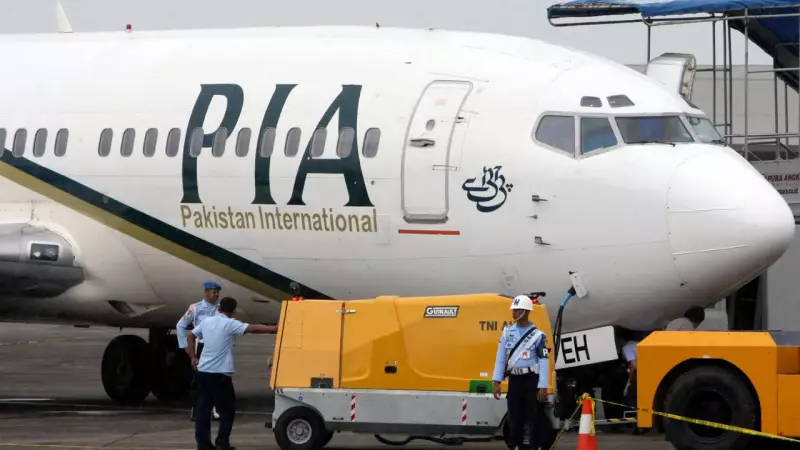
In a landmark move for Pakistan's economy, the government on Tuesday successfully privatised its national flag carrier, Pakistan International Airlines (PIA). The airline was sold for a staggering Rs 135 billion to a consortium led by the prominent investment firm, Arif Habib Corporation.
A Record-Breaking Transaction
The sale, conducted through a competitive bidding process in Islamabad, has been declared the largest transaction in Pakistan's history. It far exceeded the government's initial reference price of Rs 100 billion, indicating strong investor interest. Prime Minister Shehbaz Sharif highlighted the transparent nature of the process, which was broadcast live on local television channels.
Three major entities participated in the auction: the Arif Habib consortium, Lucky Cement, and Airblue. The bidding turned into a fierce contest between Arif Habib and Lucky Cement, with the former emerging victorious. Airblue's bid of Rs 26.5 billion was the lowest. This successful sale comes after a failed attempt last year when the airline failed to attract a satisfactory price.

Details of the PIA Privatisation Deal
The current agreement involves the sale of 75% of PIA's shares. The winning consortium, led by Arif Habib, now has a 90-day window to acquire the remaining 25% stake. A significant condition of the deal mandates the new owners to inject an additional Rs 80 billion into the airline over the next five years for its revival and modernisation.
The financial structure of the sale is particularly noteworthy. Of the total Rs 135 billion, a dominant 92.5% will be reinvested directly into PIA. Only 7.5% of the proceeds will go to the government treasury. This setup is designed to ensure the carrier gets the capital infusion it desperately needs. To make the airline an attractive asset for sale, the government had previously absorbed its colossal debt burden of Rs 654 billion last year.
Reviving a Fallen Giant
The sale marks the end of an era for PIA, which was once considered a prestigious airline but suffered decades of decline due to chronic mismanagement. This severely eroded its service standards, financial health, and global reputation, ultimately compelling the state to seek private investment.
The primary objective of this historic privatisation is to revive and rehabilitate the struggling carrier. By bringing in private sector efficiency and significant fresh capital, the Pakistani government and the new owners hope to restore PIA to its former glory and make it a competitive player in the international aviation market once again.






