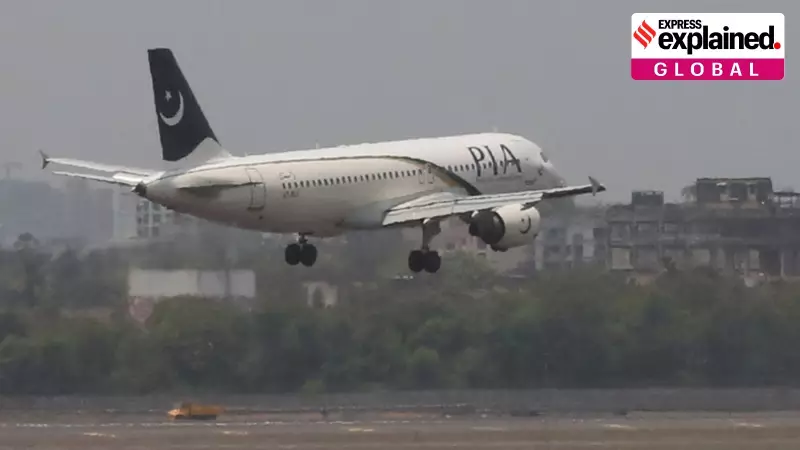
In a landmark move for Pakistan's economy, the beleaguered national flag carrier, Pakistan International Airlines (PIA), has been sold to a private consortium. The Arif Habib Consortium (AHC) secured a 75% stake in the airline with a winning bid of $480 million (approximately 13,500 crore Pakistani rupees). This deal, finalised on Tuesday, marks the country's largest privatisation exercise to date, though it comes with significant strings attached and a monumental challenge for the new owners.
An Unconventional Privatisation with Army Links
The privatisation process took an interesting turn when, on Thursday, the Pakistan Army-owned Fauji Fertilisers (FFC) announced it would join the winning private consortium. This development signals what commentators are calling an "unconventional privatisation," given the continued involvement of state-owned entities. Unlike the Indian government's complete transfer of Air India to the Tata Group in 2021, the PIA deal represents a new model of state-business partnership.
This sale is particularly significant as it is the first major privatisation in Pakistan since attempts to sell Pakistan Steel Mills were blocked by the Supreme Court. The success or failure of this transaction is seen as a litmus test for future disinvestments in other state-owned enterprises like power distribution companies.

Mounting Challenges: Debt, Fleet, and Staff
The consortium inherits an airline burdened by deep-rooted problems. PIA's struggles intensified after a tragic 2020 plane crash in Karachi that killed 97 people. A subsequent government probe revealed that 262 of the airline's 860 pilots held "fake licences," leading to flight bans by UK and EU regulators, which were only lifted earlier this year.
Financially, the carrier was drowning. However, in a strategic move to make it attractive to investors, PIA's massive debt of PKR 65,000 crore was housed in a separate holding company along with assets like The Roosevelt Hotel. This financial engineering resulted in PIA reporting its first net profit in nearly two decades—a jump from a loss of PKR 10,400 crore in 2023 to a profit of PKR 2,600 crore in 2024.
Yet, the operational hurdles remain stark. The airline operates an ageing fleet of 38 aircraft, with an average age of 17.8 years, of which only 18 are currently operational. Furthermore, it has a bloated workforce of 7,547 employees, resulting in an unwieldy staff-to-aircraft ratio of 397. Critically, the sale agreement restricts the new owners from restructuring staff for at least 12 months.
PIA's Air India Moment? A Study in Contrast
While parallels are drawn with Air India's sale to the Tata Group, the challenges differ substantially. Air India's sale involved the Tatas taking on over Rs 15,000 crore of debt, with the government absorbing the rest. PIA's debt was structurally separated before the sale.
The fleet size and pilot training issues also present a starker picture for PIA. Moreover, the privatisation was heavily prompted by pressure from the International Monetary Fund (IMF), which required Pakistan to reduce its holdings in loss-making public sector enterprises as a condition for financial support.
The financial structure of the PIA deal stipulates that 72.5% of the bid price will go to PIA, while 7.5% will enter the national exchequer. The AHC also has an option to buy the remaining 25% government stake within a year at a 12% premium.
The Consortium and the Road Ahead
The winning Arif Habib Consortium is an eclectic mix of Pakistani businesses. It includes Arif Habib Corp Ltd (financial services), Fatima Fertilizer Corp, Lake City Holdings (real estate), AKD Group Holdings, and City Schools Pvt Ltd, which operates a chain of over 500 schools.
Analysts point to PIA's valuable assets—its landing rights for 78 destinations and 170 airport slots—as key factors for a potential turnaround. The brokerage Topline Securities has suggested that this privatisation could boost Pakistan's benchmark KSE100 stock index. However, as commentator Khurram Hussain noted, the investors have purchased "a running business with a clean balance sheet" but can do little else other than operate it as an airline, with limited assets to strip down.

The journey ahead for the new owners is fraught with difficulty. Turning around PIA will require not just capital infusion but also navigating political sensitivities, modernising a decrepit fleet, and managing a large workforce in a highly competitive aviation market. The world will be watching to see if this can indeed become Pakistan's successful "Air India moment."