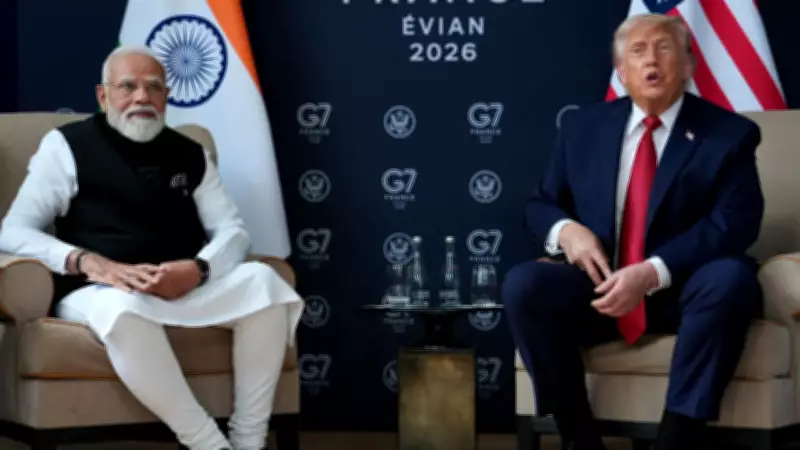
The Pentagon has quietly reversed a symbolic 2018 decision by renaming the US Indo-Pacific Command (INDOPACOM) back to Pacific Command (PACOM), a move that analysts say may signal a recalibration of Washington's Asia strategy under President Donald Trump. The change, announced Tuesday, restores the designation used from 1947 to 2018, just hours before Prime Minister Narendra Modi met with Trump on the margins of the G7 summit.
Official Stance: No Change in Mission
Officially, the Pentagon insists the renaming does not alter the command's mission. "The command's fundamental mission and its unwavering commitment to maintaining a free and open theatre alongside regional allies and partners are unchanged," a statement said, emphasizing that the area of responsibility still extends "to the western border of India." Separately, Trump told reporters after meeting Modi that the US would help India if attacked and that ties between the two countries "could not be any better."
Symbolism and Timing Raise Eyebrows
In strategic circles, the timing has raised concerns. The announcement came hours before Modi's engagement with Trump, which diplomats described as less warm than previous encounters, marked by bear hugs and stadium rallies. The meeting unfolded against a backdrop of tariff disputes, friction over India's purchases of Russian energy, visa issues for Indian professionals, renewed US engagement with Pakistan, and Indian disquiet over US military actions in the Gulf that killed Indian sailors. Trump brushed aside these issues, insisting ties were excellent.

The Pentagon's explanation for restoring PACOM invokes history. "Restoring the legacy USPACOM designation honours the command's deep historical roots," the announcement said, citing its role in post-World War II security, the Korean and Vietnam wars, and humanitarian operations. But critics argue that once Washington deliberately inserted "Indo" in 2018, removing it sends a geopolitical message. "Maybe it was a silly idea to rename the Combatant Command to add 'Indo-' but once you made that decision you've really got to stick with it unless there is a very good policy reason, which there isn't," noted Christopher Clary, a South Asian security affairs analyst.
Geopolitical Implications
The 2018 change, announced by then-Defense Secretary James Mattis, was widely seen as formal recognition that the Indian and Pacific Oceans constituted a single strategic theatre, with India as a central pillar in balancing China's influence. It became the organizing principle behind the Quad grouping involving the US, India, Japan, and Australia. Now, some analysts fear the reverse move risks signaling diminished enthusiasm for that framework. Former Indian foreign secretary Kanwal Sibal wrote on X: "The fact is all the blows to the relationship have been delivered by Trump and his team and they are still at it by renaming the US Indo-Pacific Command as the Pacific Command just before the PM Modi-Trump meeting."
Strategic Reassessment or Bureaucratic Nostalgia?
Whether the move reflects a genuine strategic shift or mere bureaucratic nostalgia is fiercely debated. One school of thought sees it as evidence of a broader Trump-era reassessment of American power after setbacks in the Middle East and intensifying competition with China. In this interpretation, Washington seeks accommodation rather than confrontation with Beijing, reducing emphasis on the Quad, limiting overseas commitments, and adopting a more transactional approach toward partners including India. Such perceptions have gained traction following Trump's outreach to China, negotiations with Iran, renewed engagement with Pakistan, and overtures across the Gulf.
Critics note Trump's diplomacy has produced unlikely alignments, including engagement with Syria's new leadership despite its militant origins, while generating friction with long-standing partners from Israel to India to the EU. Supporters of the administration reject such interpretations, noting that Adm. Samuel Paparo, the commander for the region, has urged Congress to approve a $122 billion package to strengthen deterrence against China. If Washington were downgrading Asia, they argue, it would hardly seek such investments.

Overstretched Resources, Not Diminished Interest?
Others suggest the renaming reflects overstretched American resources rather than diminished interest in India. The US has repeatedly described India as a "critical anchor" in the Indian Ocean region, and officials say extensive military cooperation, intelligence sharing, and defense technology collaboration continue. Pentagon officials stress India remains within the command's area of responsibility and operational relationships are unaffected. Yet for many strategists, names matter because they reveal priorities.
The Indo-Pacific concept emerged because China's influence extended beyond East Asia across sea lanes linking the western Pacific to the Indian Ocean. Reverting to PACOM risks creating the impression that Washington is redrawing the map just as Beijing expands its footprint from the South China Sea to ports and infrastructure across the Indian Ocean. The uncertainty comes amid broader questions about the Quad's future. Although cooperation continues on technology, supply chains, public health, and maritime awareness, a leaders' summit has yet to materialize this year, fueling speculation the grouping has lost momentum.