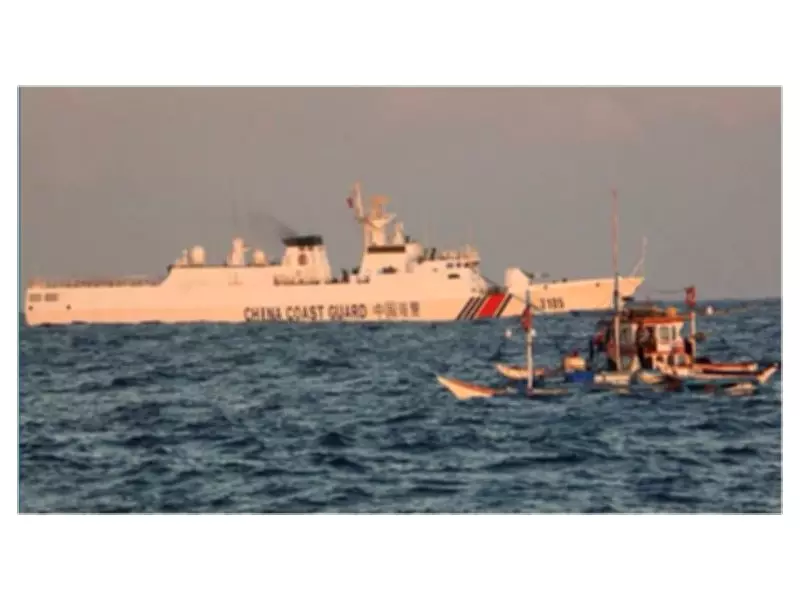
The Philippines has taken a firm stance by deploying its aircraft and naval ships to push back a Chinese drone mothership and accompanying research vessels in the South China Sea. This move marks a significant escalation in the ongoing territorial disputes between the two nations in the resource-rich region.
Details of the Deployment
According to Philippine military officials, the deployment was in response to the presence of a Chinese drone mothership, which is capable of launching multiple unmanned aerial vehicles for surveillance and possibly other military purposes. Alongside the mothership, several Chinese research vessels were also spotted operating within what the Philippines considers its exclusive economic zone (EEZ).
The Philippine Armed Forces dispatched fighter jets and naval destroyers to the area to monitor and intercept the Chinese vessels. The aircraft conducted flybys while the ships maintained a close watch, sending clear signals that Manila would not tolerate any infringement on its maritime rights.

China's Response
China has defended its actions, stating that the vessels were conducting routine scientific research and that their activities were lawful under international law. Beijing urged the Philippines to avoid any actions that could complicate the situation and called for dialogue to resolve the dispute peacefully.
Despite China's reassurances, Philippine officials have expressed concerns about the dual-use nature of the drone mothership, which could be used for both civilian and military purposes. The Philippine government has reiterated its commitment to protecting its sovereign rights and has called on China to respect the 2016 arbitration ruling that invalidated China's extensive claims in the South China Sea.
Regional Implications
The incident has drawn attention from other regional players, including the United States, which has reaffirmed its defense treaty obligations with the Philippines. The US has been conducting joint patrols with the Philippine navy in the area, further complicating the geopolitical landscape.
Analysts believe that the deployment of advanced drone technology by China in the South China Sea represents a new dimension in the strategic competition. The ability to deploy drones from a mothership gives China a persistent surveillance capability, which could tilt the balance of power in the region.
Philippine Military Readiness
Philippine Defense Secretary Delfin Lorenzana stated that the military is prepared for any eventuality and that the deployment was a measured response to a potential threat. He emphasized that the Philippines remains committed to a rules-based international order and will continue to assert its rights under the United Nations Convention on the Law of the Sea (UNCLOS).
The Philippine Navy has been modernizing its fleet, but it still faces challenges in matching the technological advancements of the Chinese military. However, the government has been actively seeking partnerships with allies to enhance its maritime capabilities.
In conclusion, the Philippines' decision to deploy aircraft and ships to push back the Chinese drone mothership and research vessels underscores the growing tensions in the South China Sea. While both sides have called for restraint, the incident highlights the fragile nature of peace in the region and the potential for further confrontations.