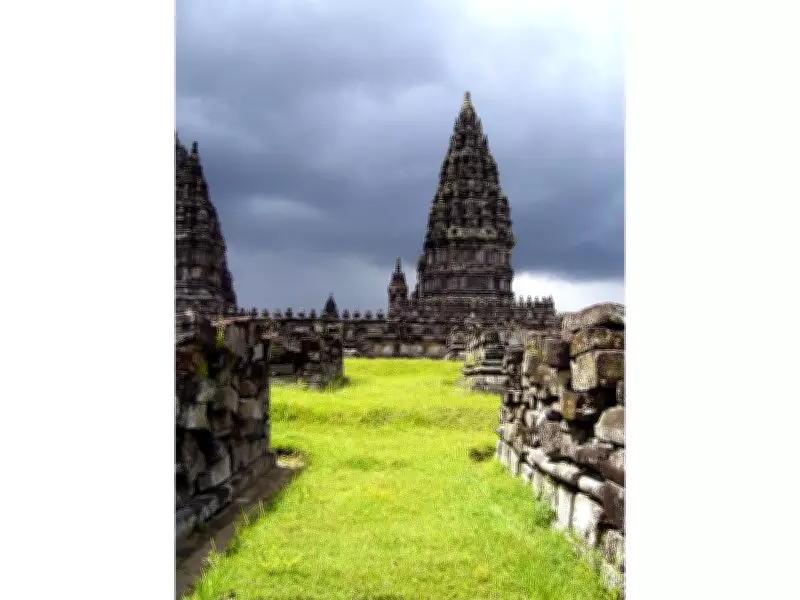
Prime Minister Narendra Modi, alongside Indonesian President Prabowo Subianto, will visit the historic Prambanan Temple in Yogyakarta, Indonesia on Wednesday to launch a conservation project for the 1,000-year-old temple complex. This initiative is part of India's broader cultural diplomacy and Act East policy aimed at preserving shared civilisational heritage across South and Southeast Asia.
India's Role in Restoring Regional Heritage
PM Modi described the Prambanan Temple as "another remarkable testament" to the deep cultural and civilisational ties that have connected India and Indonesia for over a thousand years. The Archaeological Survey of India (ASI) is partnering with Indonesian authorities for the restoration and conservation of several smaller temples within the Prambanan complex.
Since 2014, the Indian government under PM Modi has been at the forefront of reviving shared heritage across the region. In 2014, India restored the UNESCO-listed My Son Sanctuary, a significant Shaivite temple complex and religious centre of the ancient Champa Kingdom in Southeast Asia. In 2015, India provided LKR 326 million in grant assistance for the restoration of the Thiruketheeswaram Temple in Sri Lanka, one of the five ancient Pancha Ishwarams dedicated to Lord Shiva.

Expanding Conservation Efforts
In 2017, India signed an MoU to restore earthquake-damaged monuments in the UNESCO-listed Bagan Archaeological Zone in Myanmar, undertaking restoration of 12 historic pagodas through the ASI, including the historic Ananda Temple. That same year, under India's USD 50 million post-earthquake reconstruction assistance to Nepal, the Modi government launched restoration and conservation of 28 cultural heritage sites, including the Seto Machhindranath Temple and Budhanilkantha Temple Dharamshala.
In 2019, during his historic visit to Bahrain, PM Modi inaugurated the USD 4.2 million redevelopment project of the 200-year-old Shreenathji (Shri Krishna) Temple in Manama, preserving one of the oldest Hindu temples in the Gulf region. In 2020, India financed the reconstruction of the nearly 300-year-old Joy Kali Mata Temple in Natore, Bangladesh, and supported restoration of the Anandomoyee Kali Mata Mandir and the Ramakrishna Temple.
Recent Projects and Significance
In 2021, the Modi government announced assistance for the reconstruction of the historic Ramna Kali Temple in Bangladesh, destroyed during Pakistan's Operation Searchlight in 1971. The temple was inaugurated that year, restoring a major Hindu shrine and reinforcing shared civilisational ties. In 2022, India restored and conserved key sections of the Angkor heritage complex in Cambodia, including Ta Prohm, Angkor Wat, and Preah Vihear. In 2024, India restored key structures of the UNESCO-listed Vat Phou Temple in Laos, a nearly 1,000-year-old Shiva temple regarded as one of Southeast Asia's oldest surviving symbols of Sanatan civilisation.
The Prambanan Temple Complex
Prambanan is among the largest temple complexes near Yogyakarta on the Indonesian island of Java, containing original structures built in the 9th century AD. The temples collapsed due to earthquakes, including the May 2006 Java earthquake, volcanic eruptions, and a shift of political power in the early 11th century. They were rediscovered in the 17th century. The complex consists of 240 temples dedicated to Shiva, Vishnu, and Brahma, designed as three concentric squares with 224 temples in total. The inner square contains 16 temples, the most significant being the 47-meter-high central Shiva temple flanked by the Brahma temple to the north and the Vishnu temple to the south.
According to UNESCO, which declared it a World Heritage site, the temple's stone reliefs illustrate the Indonesian version of the Ramayana epic. The Prambanan Temple Compounds present the grandiose culture of Shiva art as a masterpiece of the classical period in Indonesia. Restoration works have been conducted since 1918 using both original traditional methods of interlocking stone and modern concrete to strengthen the temple structure. The site was designated as Indonesia's National Cultural Property in 1998. During full moon evenings from May to October, the Ramayana ballet is performed in an open-air theatre on the southern side of the temple.