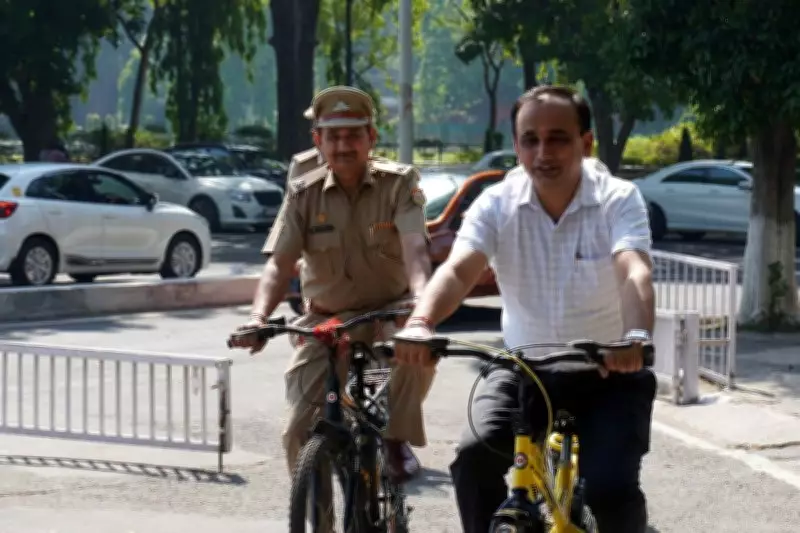
In a commendable move towards environmental sustainability, officials from the Panjab University (PU) administration actively participated in the 'Vehicle-Free Wednesday' drive in Chandigarh. The initiative, aimed at reducing vehicular pollution and promoting eco-friendly modes of transport, saw university staff and administrators leaving their cars behind and opting for bicycles, walking, or public transport.
Promoting Green Commute
The drive, organized under the broader campaign for a cleaner and greener Chandigarh, encouraged participants to adopt sustainable commuting habits. PU's Vice-Chancellor and other senior officials led by example, cycling to the university campus. This initiative not only highlights the university's commitment to environmental conservation but also sets a precedent for other institutions to follow.
Impact on Carbon Footprint
By participating in the Vehicle-Free Wednesday drive, PU officials contributed to reducing the carbon footprint associated with daily commutes. The campaign is part of a series of measures taken by the Chandigarh administration to combat air pollution and traffic congestion. Regular participation in such drives can significantly lower greenhouse gas emissions and improve air quality in the city.

Community Engagement
The event also fostered a sense of community and collective responsibility among participants. Staff members expressed enthusiasm for the initiative, noting that it promotes physical health and environmental awareness. Many suggested extending the drive to include students and local residents, thereby amplifying its impact.
Future Plans
Encouraged by the positive response, PU administration plans to make Vehicle-Free Wednesday a regular feature. In addition, the university is exploring the installation of more bicycle racks and pedestrian-friendly pathways to support non-motorized transport. Such infrastructure improvements will further encourage the campus community to embrace sustainable travel options.
The success of this drive underscores the potential of small, consistent actions in achieving larger environmental goals. As more institutions and individuals join the movement, the vision of a cleaner, healthier urban environment comes closer to reality.