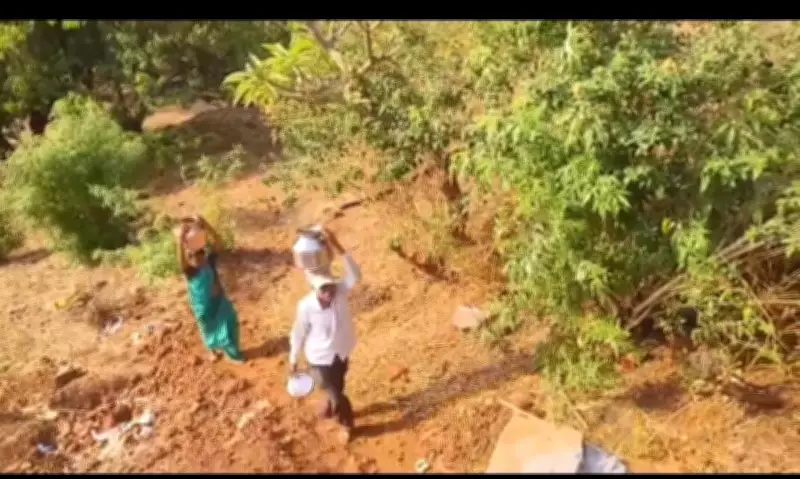
Pune: Bhimashankar in Pune district, which receives an average rainfall of over 1,900 to 2,000mm during the monsoon, should hardly face water scarcity. However, the summers here are so dry that hundreds of tribal women from remote hamlets descend the steep and rocky hillsides every morning in search of water to fill their vessels, then begin the hazardous climb back on tricky terrain with pots balanced on their heads.
Acute Water Crisis in Tribal Hamlets
In the tribal pockets of Ambegaon tehsil, including Kondwal, Ahupe, Koldara, Falode, Rajpur, and several other hamlets around the Bhimashankar forest region, residents are battling an acute drinking water crisis. Many young men have migrated to cities for livelihood, leaving behind the elderly and women to manage households and daily chores.
A dangerous daily ritual to fetch water has become essential for survival because wells have run dry and hand pumps yield nothing. Women now walk long distances daily through forested hills and dangerous slopes to collect a few pots of muddy water. The situation is similar in hamlets in the Naneghat and Malshiras regions of Junnar tehsil.

Life-Threatening Journeys
“We leave before sunrise because if we get late, the water is gone,” said 48-year-old Rakhamabai Waje from Kondwal village in Ambegaon tehsil, around 130 km from Pune city. For many women like her, the journey is not merely exhausting but life-threatening. “Sometimes, our feet slip while climbing with the water pot. If we fall into the valley, nobody will even know,” Waje added.
Tribal activist Budhaji Damse from Ambegaon tehsil said the district administration has failed to implement on-the-ground arrangements to store rainwater in these tribal belts. “These hamlets receive huge amounts of rainfall during the monsoon but people, for years, have been struggling to get water in summer. Scientific water conservation work in these pockets is necessary to address this issue,” he added.
Intensified Ordeal This Summer
The ordeal has intensified this summer as rising temperatures have depleted already fragile water sources. In several hamlets, residents said water is available only once every two days. “We go down the hillside to the valleys carrying empty vessels and return with pots containing 20 to 25 litres of water on our heads. A small misstep or a slip can cost a life. We have no choice because there is no water in our hamlet,” said Rukmini Bangale from Bangalewadi.
Other residents stressed the need for permanent drinking water infrastructure in the hilly tribal belt. While government tankers occasionally reach some hamlets, many remote settlements remain inaccessible due to poor roads and difficult terrain.
Impact on Daily Life and Health
Women spend four to five hours every day collecting water, leaving little time for farming, wage labour, or childcare. Children, especially girls, often accompany their mothers during these exhausting trips. Mangala Bhoye, another resident of the hamlet, said the entire day is spent finding water. “We cannot think about work, education or anything else. Getting water is our biggest struggle,” she added.
Villagers also fear health consequences. The stagnant water collected from small rock pits and seasonal streams is often contaminated, increasing the risk of diarrhoea, skin infections, and other diseases during peak summer.
Years of Neglect
Activists and residents say the recurring crisis reflects years of neglect despite repeated demands for permanent water supply schemes. “Every summer, we face the same situation, but there is still no sustainable solution. Pipeline projects, storage tanks, and watershed works are either incomplete or never reach the interior hamlets,” said Digambar Bhalchim, former sarpanch of Malin village.
Residents are demanding immediate tanker supply, restoration of defunct borewells, and long-term watershed and rainwater harvesting projects before the monsoon arrives.