

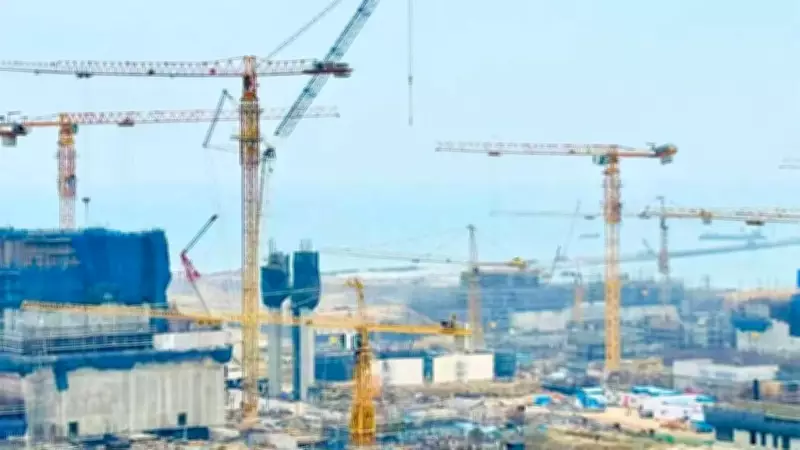
Russian President Vladimir Putin has expressed confidence that bilateral trade between Russia and India could reach $100 billion in the coming years, underscoring Moscow's ambition to deepen its strategic and economic partnership with New Delhi. Speaking at the St Petersburg International Economic Forum (SPIEF), Putin highlighted the ongoing construction of the Kudankulam Nuclear Power Plant and signaled the possibility of new energy projects between the two nations.
Energy Cooperation at the Forefront
Putin stated, "Russia and India continue to build the Kudankulam nuclear power plant, while we anticipate new joint projects in the field of peaceful use of nuclear energy." He further added, "We are confident that we will reach $100 billion in trade turnover in the coming years." The Russian leader also indicated that future cooperation would extend beyond nuclear energy into the hydrocarbon sector, saying, "New platforms will emerge in terms of hydrocarbons. We will be continuing to work together."
Kudankulam Nuclear Power Plant: A Symbol of Partnership
The Kudankulam Nuclear Power Plant (KKNPP) in Tamil Nadu remains the centerpiece of India-Russia civil nuclear cooperation. Originating from a 1988 agreement between Prime Minister Rajiv Gandhi and Soviet leader Mikhail Gorbachev, the project was revived in the late 1990s after the collapse of the Soviet Union. Currently, the plant operates two Russian-designed VVER-1000 reactors, with four additional units under construction. Once all six units become operational, Kudankulam will have a total installed capacity of around 6,000 MW.

The project is being developed with technical assistance from Russia's state nuclear corporation Rosatom and incorporates advanced safety features, including passive heat removal systems and multiple layers of reactor containment. Beyond power generation, the project has contributed to technology transfer, industrial cooperation, and the development of a skilled workforce in India's nuclear sector.
Strategic Implications
Kudankulam stands as a symbol of the enduring India-Russia partnership. As the project moves toward full capacity and bilateral trade continues to expand, nuclear energy is increasingly emerging alongside defense and hydrocarbons as a key pillar of the strategic partnership between New Delhi and Moscow. Putin's remarks at SPIEF reinforce the commitment to deepening ties, with energy serving as a primary driver for achieving the ambitious $100 billion trade target.






