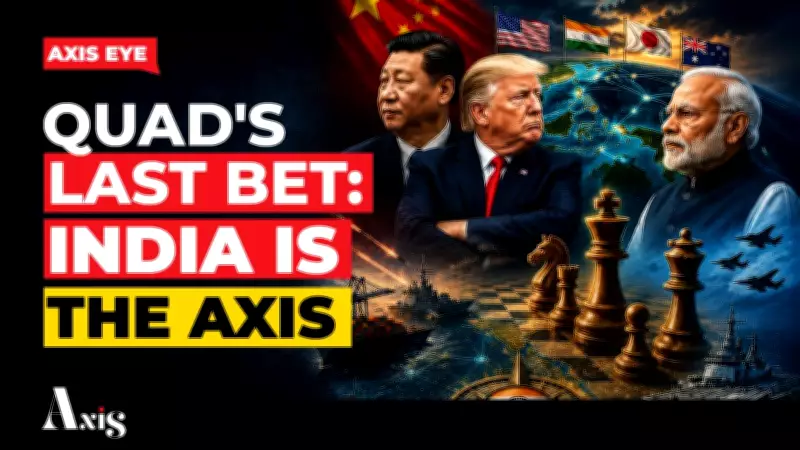
The Indo-Pacific power balance is undergoing a rapid transformation, with India now positioned at the center of this geopolitical shift. After Chinese President Xi Jinping provided United States President Donald Trump with optics but no substantive outcomes during his visit to Beijing, China quickly shifted its strategic focus, deepening coordination with Russian President Vladimir Putin. The message from Beijing was unmistakable: it views Moscow as a long-term strategic partner, not merely a diplomatic guest. This development has forced Washington into a strategic reassessment.
The Quad's Renewed Relevance
The Quadrilateral Security Dialogue, commonly known as the Quad, has suddenly regained significance. The United States increasingly believes that India is the only power capable of balancing China's influence in Asia without becoming overly dependent on Washington itself. This belief is driving America's renewed engagement with the Quad and its focus on India as a key partner.
Marco Rubio's Visit and Growing Concerns
US Secretary of State Marco Rubio's visit to India comes amid growing concern over China's aggressive posture on Taiwan, its dominance in critical minerals, control over supply chains, and expanding geopolitical influence. These issues underscore the urgency for the Quad to evolve from a symbolic forum into a serious coalition capable of addressing shared security and economic challenges in the Indo-Pacific.

Can the Quad Evolve Beyond Symbolism?
The bigger question remains: can the Quad evolve beyond symbolic meetings into a robust Indo-Pacific coalition? The member nations—India, the United States, Japan, and Australia—must translate their shared interests into concrete actions. This includes enhancing maritime security, promoting supply chain resilience, and countering China's influence in the region.
Why Beijing Fears India's Rise
Beijing's apprehension about India's rise is more pronounced than its concern over any other Quad member. India's strategic location, growing economy, and military capabilities make it a formidable counterbalance to China's ambitions. Additionally, India's independent foreign policy and its ability to forge partnerships with other major powers without aligning entirely with any one bloc make it a unique and influential player in the Indo-Pacific equation.
From the interactions between Trump and Xi to Rubio's diplomatic engagements and the future of the Quad, this report decodes Asia's new geopolitical battlefield. The stakes are high, and the decisions made in the coming months will shape the region's power dynamics for years to come.