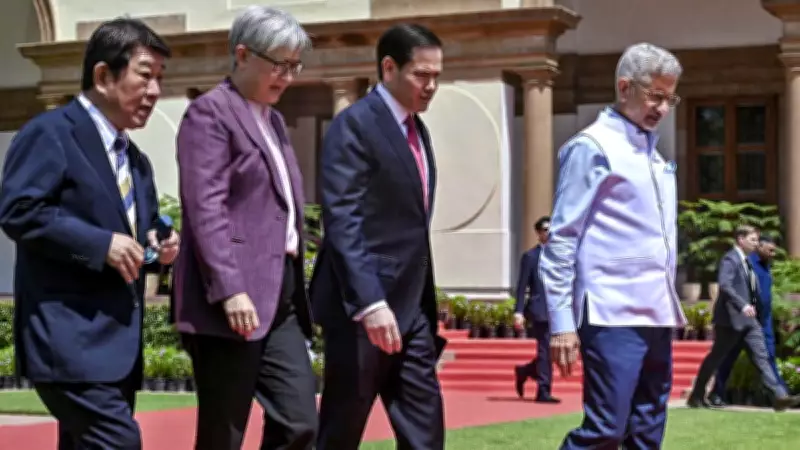
The Quadrilateral Security Dialogue (Quad) has intensified its focus on the Indo-Pacific region by enhancing surveillance operations and deepening cooperation on critical minerals. This strategic move underscores the group's commitment to countering shared challenges, including China's growing influence.
New Initiatives Announced
Indian External Affairs Minister S. Jaishankar unveiled two key initiatives under the broader Quad agenda: a Critical Minerals Framework and an Indo-Pacific Energy Security Initiative. These programs aim to strengthen supply chains and ensure energy stability in the region.
Critical Minerals Framework
The framework seeks to bolster cooperation among Quad members—Australia, India, Japan, and the United States—in the exploration, extraction, and processing of critical minerals essential for advanced technologies and renewable energy systems. This collaboration is designed to reduce dependency on China, which currently dominates the global supply chain for minerals like lithium, cobalt, and rare earths.

Indo-Pacific Energy Security Initiative
The energy security initiative focuses on promoting clean energy transitions and enhancing energy resilience across the Indo-Pacific. It includes joint projects in renewable energy, grid modernization, and energy storage technologies. By diversifying energy sources and improving infrastructure, the Quad aims to support sustainable development and reduce vulnerabilities.
Surveillance Operations
Quad nations have increased their maritime surveillance and information-sharing activities in the Indo-Pacific. This includes coordinated patrols, real-time data exchange, and joint exercises to monitor activities in critical waterways such as the South China Sea. These efforts are part of a broader strategy to uphold freedom of navigation and deter aggressive behavior.
Strategic Implications
The enhanced cooperation signals a unified stance against challenges to the rules-based international order. By focusing on both security and economic domains, the Quad is addressing multifaceted threats ranging from territorial disputes to supply chain vulnerabilities. The initiatives also align with each member's national interests, fostering deeper integration among the four democracies.
Jaishankar emphasized that the Quad is not directed against any country but is a collective effort to promote peace, stability, and prosperity in the region. However, the measures are widely seen as a response to China's assertiveness in the Indo-Pacific, particularly its military buildup and economic coercion.
Reactions and Future Steps
The announcements have drawn mixed reactions. Supporters view them as necessary steps to ensure regional balance, while critics warn of escalating tensions. The Quad is expected to continue expanding its agenda, with upcoming summits likely to address technology cooperation, infrastructure development, and pandemic response.
As the Indo-Pacific becomes the epicenter of global geopolitics, the Quad's initiatives represent a concerted effort to shape the region's future. The success of these programs will depend on effective implementation and sustained political will among member states.