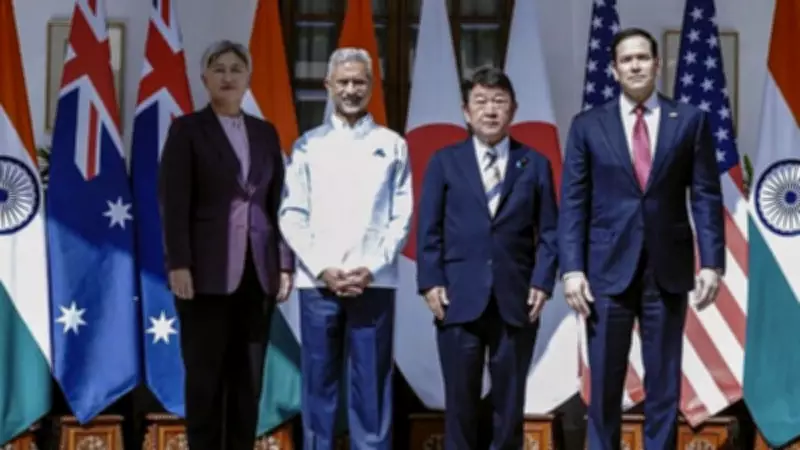
The Quadrilateral Security Dialogue, commonly known as the Quad, is set to launch a joint maritime surveillance initiative in the Indo-Pacific region, a move that has drawn sharp criticism from China. The Quad, comprising the United States, India, Japan, and Australia, was initially established in 2007 as a grouping of four maritime democracies. It was revived in 2017 amid growing concerns over China's expansionist policies and hegemonic ambitions in the strategically vital Indo-Pacific.
Background of the Quad
The Quad's origins trace back to the 2004 Indian Ocean tsunami, when the four nations coordinated relief efforts. However, the formal grouping was launched in 2007 during a meeting on the sidelines of the ASEAN summit. The initiative was short-lived, as Australia withdrew in 2008 under pressure from China. The Quad was revived in 2017 as China's assertiveness in the South China Sea and the broader Indo-Pacific region intensified.
Maritime Surveillance Initiative
The joint maritime surveillance effort is expected to enhance information-sharing and coordination among Quad members to monitor activities in the Indo-Pacific. This includes tracking naval movements, countering piracy, and ensuring freedom of navigation. The initiative is seen as a key step in bolstering the Quad's operational capabilities beyond diplomatic and economic cooperation.

China's Reaction
China has expressed strong opposition to the Quad's latest move, accusing the grouping of creating division and undermining regional stability. Beijing has repeatedly criticized the Quad as an exclusive bloc aimed at containing China's rise. Chinese officials have warned that the surveillance initiative could escalate tensions in the region.
Strategic Implications
The Quad's maritime surveillance initiative is likely to have significant strategic implications. It underscores the growing convergence of interests among the four democracies in maintaining a free and open Indo-Pacific. The move also signals a shift towards more concrete security cooperation, which could include joint patrols and exercises in the future. However, analysts caution that such steps could provoke further friction with China, potentially leading to a more polarized regional security environment.
As the Quad continues to expand its agenda, the Indo-Pacific region remains at the center of geopolitical competition between the world's largest democracies and China. The success of the maritime surveillance initiative will depend on the Quad's ability to sustain political will and operational coordination among its members.