After a year of uncertainty marked by the prolonged absence of a leaders' summit, the Quad grouping announced a series of initiatives aimed at bolstering cooperation in key areas such as critical minerals, energy security, and maritime surveillance in the Indian Ocean. Additionally, the foreign ministers revealed plans to construct a port in Fiji, signaling an effort to supercharge the Quad's 'global good' agenda.
Quad's Commitment and Iran Message
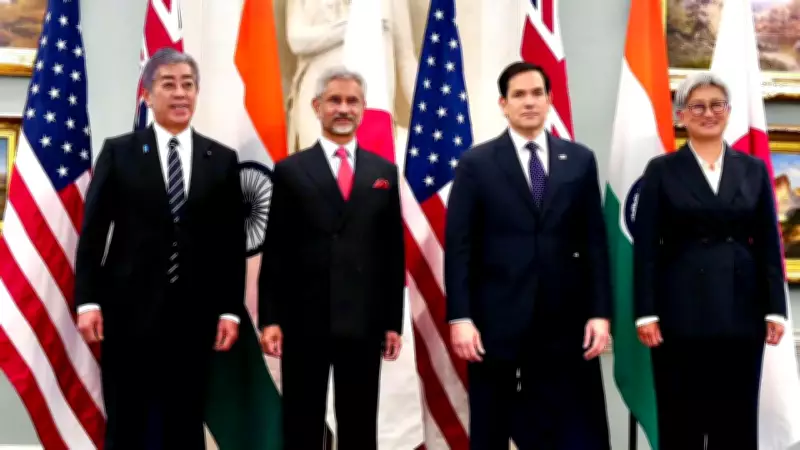
Indian officials stated after the foreign ministers' meeting of the informal grouping—comprising Australia, India, Japan, and the United States—that the Quad is here to stay and will continue to strengthen. The meeting, attended by Australia's Penny Wong, India's S. Jaishankar, Japan's Toshimitsu Motegi, and the US's Marco Rubio, also sent a clear message to Iran by condemning attacks on commercial shipping vessels and opposing any future measures inconsistent with the United Nations Convention on the Law of the Sea (UNCLOS), including the imposition of tolls by Tehran in the Strait of Hormuz. The Indian government maintains it is not paying any toll for 'navigational services' through the Strait.
In a joint statement, the ministers reiterated the importance of adhering to international law as reflected in UNCLOS concerning navigational rights and freedoms, as well as the safety and uninterrupted flow of global commerce through the Strait of Hormuz and the Red Sea. Jaishankar emphasized the need for safe and unimpeded commerce.

Counter-Terrorism and Energy Security
The foreign ministers' meeting also strongly condemned cross-border terrorism and the Pahalgam terrorist attack. Jaishankar called for zero tolerance for terrorism, stating that nations subjected to terrorist attacks have the right to defend themselves. Energy security emerged as a key focus area. Recognizing shifts in the global energy landscape and increasing geopolitical complexities, the Quad launched the Quad Initiative on Indo-Pacific Energy Security to cooperate on energy security and resilience. The ministers stated that Quad partners will work together to ensure open, well-functioning, and stable energy markets, as well as resilient and diversified supply chains. 'Maintaining open trade flows in essential goods is critical for the security and prosperity of the Indo-Pacific region,' the joint statement said. The initiative calls for maximizing efforts to support each other's and the region's energy security needs during times of restricted global energy markets, while leveraging the unique resources and capabilities of each country's energy sector, including strengthening their respective strategic petroleum systems. Rubio announced that the US will host a Quad fuel forum later this year.
Maritime Surveillance and Indo-Pacific Stability
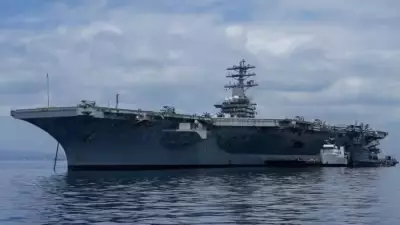
The Quad ministers also noted that developments in key maritime regions have underscored the vulnerability of critical sea lanes and the risks posed to the uninterrupted flow of commerce. 'These challenges carry significant implications for the Indo-Pacific, which remains central to global trade and connectivity. Disruptions to maritime transport and supply chains have far-reaching consequences for global fuel, food, and fertilizer security as well as the safety of seafarers,' the joint statement said. Following the meeting, Rubio announced the launch of the Indo-Pacific Maritime Surveillance Corporation (IPMSC) Initiative, designed to leverage each of the four countries' maritime surveillance capabilities in the Indo-Pacific to enhance information sharing and maritime domain awareness. The initiative will also enable Quad partners to share real-time information and provide an enhanced picture of vessels in support of a free and open Indo-Pacific region.
MEA Additional Secretary Nagaraj Naidu, who briefed the media after the meeting, clarified that this should not be seen as the militarization of the Quad. 'The idea today is that international waterways are getting clogged. At the same time, there are dark ships around. So, countries in the Indo-Pacific sometimes do not have access to such technologies. And so, Quad partners have come together,' Naidu said. The initiative will initially focus on the Indian Ocean region.

Jaishankar's Remarks and Regional Concerns
In his media statement, Jaishankar said that whether it is economic activity, energy trade, or maritime commerce, the Indo-Pacific will become even more important to the world. 'The responsibilities of the Quad will grow commensurately, and we must prepare for that,' he added. Regarding the situation in the East China Sea and South China Sea, where concerns remain about Chinese assertiveness, the Quad reiterated its opposition to any destabilizing or unilateral actions, including by force or coercion, that threaten peace and stability in the region. The grouping emphasized the importance of upholding freedom of navigation and overflight.