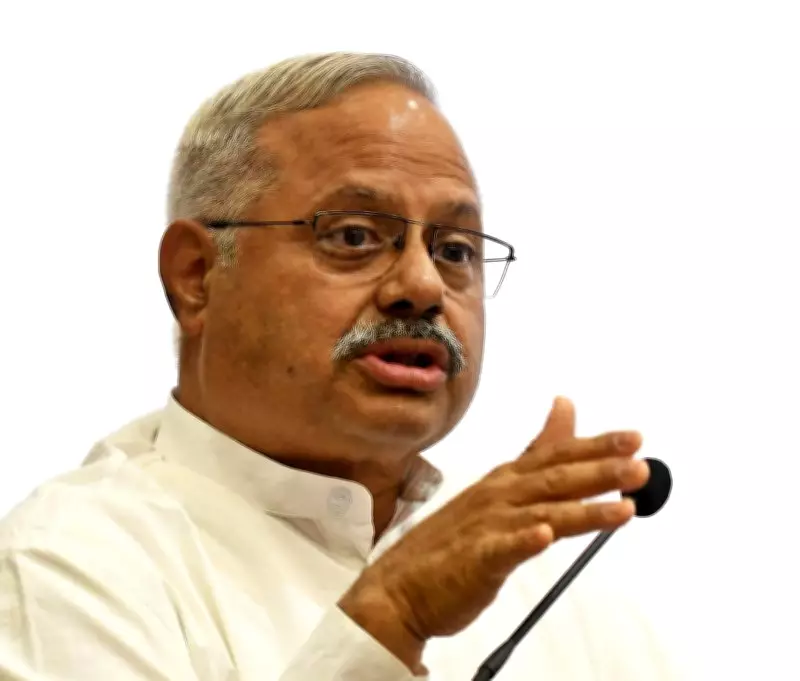
Rashtriya Swayamsevak Sangh (RSS) leader Sunil Ambekar on Wednesday underscored the importance of fostering people-to-people connections between India and Pakistan, asserting that dialogues conducted between the governments, armies, and agencies of the two nations have not succeeded.
Ambekar's Remarks on Diplomatic Engagement
During an interaction with reporters at the Pune Union of Working Journalists, Ambekar clarified that earlier statements made by senior RSS functionary Dattatreya Hosabale and organization chief Mohan Bhagwat regarding talks with Pakistan were centered on grassroots-level interactions, not official diplomatic channels.
“The remarks made by Sarsanghchalak (RSS chief) were about people-to-people connections. Whether governments should hold talks or not is a matter of hard diplomacy involving national interests and several sensitive issues,” Ambekar explained.

Context of Previous Statements
In May, Hosabale told PTI Videos that trust in Pakistan’s military and political leadership was completely absent in India, adding that people-to-people contact was the best way to break the deadlock. Bhagwat later defended Hosabale’s remarks, stating he was referring to the people of the neighboring country.
Ambekar emphasized that foreign policy decisions should be left to the government, especially during times of conflict or extraordinary circumstances. “When issues relating to foreign countries arise, political differences should be set aside, and views should be conveyed to the government, which should take the final public position in the national interest,” the RSS publicity chief said.
Role of RSS in Foreign Policy
Ambekar noted that the RSS, as a social and cultural organization, communicates its views to the government when necessary. He further elaborated on Bhagwat’s remarks, stating that conventional engagement channels between governments, armies, and agencies have not yielded desired results.
“Whatever dialogue has taken place between governments, armies and agencies has failed till now. We have lost hope... Therefore, people-to-people connection is important,” he said.
Examples of Ongoing Exchanges
Ambekar cited ongoing exchanges such as medical travel and trade between the two countries, arguing that such interactions could help preserve shared historical and cultural memories. He also referred to sentiments in regions like Balochistan, suggesting that greater awareness of shared histories could contribute to addressing long-standing issues.
“People-to-people dialogue is very important and should continue. It should not be viewed as political diplomacy,” Ambekar stated.
Broader Outreach by RSS
During the interaction, Ambekar also touched upon issues like demographic balance, population policies, and outreach to the Muslim community, affirming that the RSS remains open to dialogue with all sections of society.