

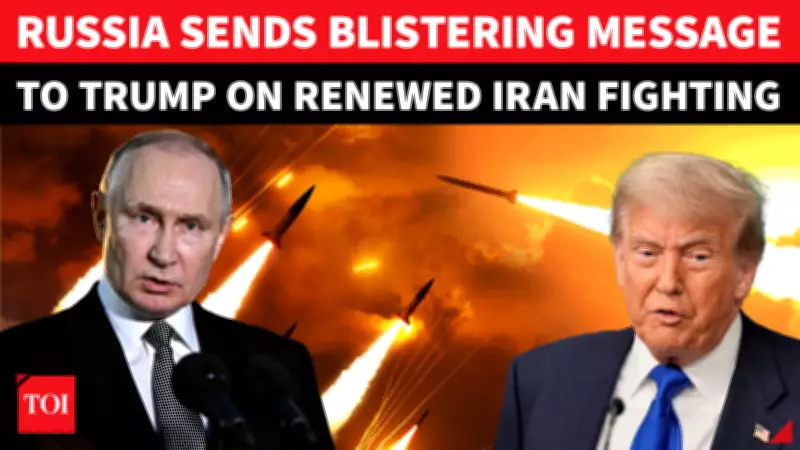
Russia has called on the United States and Iran to step back from the brink and resume negotiations as fears of a wider war grow. Kremlin spokesman Dmitry Peskov warned that continued military escalation could have severe consequences for both the Middle East and the global economy.
Renewed Missile Strikes and Threats
Moscow's appeal comes amid renewed missile strikes, threats to shipping in the Strait of Hormuz and mounting international concern that the conflict could spiral into a much larger regional crisis. The situation has escalated rapidly, with both sides engaging in military actions that raise the stakes for the entire region.
International Concerns Mount
The international community has expressed growing alarm over the potential for a broader conflict. The Kremlin's statement underscores the urgency of de-escalation, warning that continued hostilities could have negative consequences far beyond the immediate theater of operations.

Peskov emphasized that Russia is closely monitoring the situation and believes that a diplomatic solution is still possible if both parties show restraint. He reiterated Moscow's readiness to facilitate talks between Washington and Tehran.
Economic Fallout
Beyond the immediate security concerns, the crisis poses a significant threat to the global economy. The Strait of Hormuz, a critical chokepoint for oil shipments, has seen increased tensions, with potential disruptions to energy supplies. Russia warned that any further escalation could lead to severe economic repercussions worldwide.
The Kremlin's statement comes as the US military released footage of a missile attack on an India-crewed ship near Oman, and reports emerged of Iran attacking US bases in Kuwait and Bahrain. The Pentagon was placed under emergency lockdown, and the IRGC claimed attacks on vessels in response to US strikes, shutting the Strait of Hormuz.
Russia's warning serves as a stark reminder of the high stakes involved and the urgent need for diplomatic engagement to prevent a full-scale war.






