

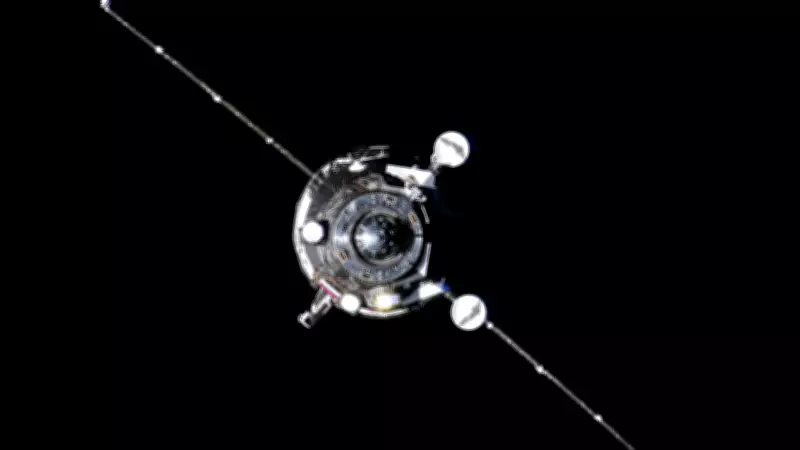
The Russian Progress 95 cargo spacecraft has successfully docked to the International Space Station (ISS), delivering essential supplies such as food, fuel, water, and scientific equipment to the astronauts on board. This mission underscores the critical role of resupply vehicles in maintaining the station's operations.
What is the Progress Spacecraft?
Progress is an unmanned Russian cargo spacecraft derived from the design of the manned Soyuz spacecraft. It has been in service since the late 1970s, providing a reliable means of delivering supplies to the ISS. Each Progress mission, including Progress 95, transports food, clothing, medicine, scientific gear, and propellant for orbital corrections. Unlike manned spacecraft, Progress does not return to Earth; after its mission, it is filled with waste and burns up in the atmosphere.
How Progress 95 Supports the ISS
The Progress 95 mission is vital for sustaining the ISS. It delivers propellant for reboost maneuvers to maintain the station's orbit and avoid space debris, as well as oxygen and water for the crew. Additionally, it provides tools and equipment for scientific research conducted aboard the station.

Docking and Technology
Progress 95 launched atop a Soyuz rocket and docked autonomously using the Kurs navigation system. In case of emergencies, cosmonauts can take manual control. The European Space Agency highlights that automated docking has significantly improved the success rate of cargo missions.
Why Missions Like Progress 95 Matter
This mission exemplifies international cooperation in space, with agencies like NASA and Roscosmos working together. Resupply missions are the backbone of sustainable human spaceflight, enabling continuous science and discovery in microgravity. They also test technologies for future lunar and Martian exploration. Progress 95 serves as a lifeline, ensuring the safety and productivity of the ISS crew.






