

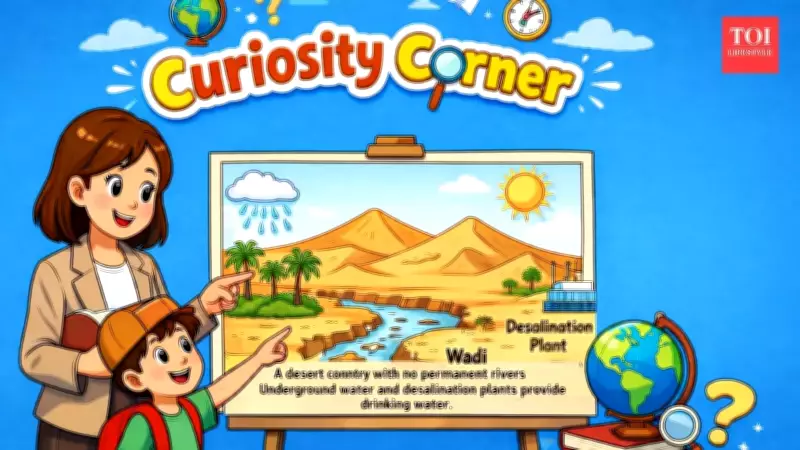
Saudi Arabia's Unique Geography: A Nation Without Permanent Rivers
Imagine opening a map and scanning for the distinctive blue lines that typically represent rivers. Now, picture finding none at all in a vast nation. This scenario might sound unusual, but it is a reality for Saudi Arabia, a country where not a single permanent river flows across its expansive territory. This geographical anomaly makes Saudi Arabia a unique case study in how environments shape human adaptation and resource management.
Why Are There No Rivers in Saudi Arabia?
Saudi Arabia is predominantly a desert nation, with large swathes of its land covered by arid landscapes such as the Rub' al Khali, also known as the Empty Quarter, which ranks among the world's largest sand deserts. The formation of permanent rivers relies heavily on consistent rainfall or melting snow from mountains, conditions that are largely absent here.
The country receives very little annual precipitation, with many areas recording less than 100 millimetres of rain each year. In stark contrast, countries like India often experience over 1,000 millimetres of rainfall in numerous regions. This scarcity of regular rain prevents the development and sustenance of rivers that flow year-round, resulting in the absence of permanent waterways.

What Happens When It Rains in Saudi Arabia?
Rainfall does occur occasionally in Saudi Arabia, and when it does, it leads to the formation of temporary streams known as "wadis." A notable example is Wadi Hanifah near Riyadh, where water can rush through during heavy rains. However, these wadis are ephemeral; the water quickly dries up after the rain ceases, failing to establish a lasting river system. Thus, while water movement happens, it is insufficient to create permanent rivers.
How Do People Access Water in a Riverless Nation?
In the absence of rivers, Saudi Arabia has implemented innovative strategies to meet its water needs. The country taps into underground water reserves that have accumulated over thousands of years, stored deep beneath the earth's surface. Additionally, Saudi Arabia operates some of the world's largest desalination plants, making it a top global producer of desalinated water.
Through advanced desalination processes, seawater from the Arabian Gulf and the Red Sea is transformed into potable water for urban populations. This demonstrates that while living without rivers is challenging, it is achievable with careful planning and technological investment.
How Does This Shape Daily Life and Culture?
Water is a precious resource in Saudi Arabia, influencing daily practices and cultural norms. Citizens are educated on water conservation, and many households and gardens incorporate water-saving systems. The lack of rivers means traditional activities like picnics by riverbanks or boat rides are uncommon, with desert landscapes and oases instead playing a central role in shaping the nation's culture and recreational pursuits.
Are There Other Countries Without Rivers?
Saudi Arabia is the largest country in the world without permanent rivers. While a few small desert city-states also lack rivers, Saudi Arabia's size—covering more than 2 million square kilometres—makes it particularly distinctive. This characteristic sets it apart on the global map, highlighting the diverse ways nature manifests across different regions.
Some nations boast mighty rivers or snowy mountains, but Saudi Arabia is defined by its vast deserts and the absence of permanent waterways, underscoring the planet's varied geographical features.
Disclaimer: This article is based on widely accepted geographical data regarding Saudi Arabia's climate and water systems. It focuses on permanent rivers, excluding temporary rain-fed streams. Information has been simplified for educational purposes to enhance understanding for readers of all ages.






