Mysuru: The scanty rainfall during the pre-monsoon season has significantly impacted pre-kharif sowing and other agricultural activities in Mysuru district this year. The department of agriculture had set a target of 25,000 to 30,000 hectares for pre-kharif sowing during March and April. However, the district recorded 70% less rainfall than normal during the pre-monsoon period.
According to data, the district received only 24.6 millimetres of rainfall between March 1 and April 30, compared to the normal 81.1 mm. In April alone, the district received 9.8 mm of rain against the usual 66.2 mm, marking a deficit of 85% during the crucial pre-kharif sowing season. From January to the end of April, the district experienced a 50% rainfall deficiency, officials stated.
Farmers typically sow crops such as cotton, pulses, and oilseeds including blackgram, cowpea, horsegram, green gram, and fodder during the pre-kharif season. The targeted area for these crops is 20,000 to 30,000 hectares out of the total 2.86 lakh hectares of rain-fed land in the district. This year, due to the sparse and scattered rainfall, farmers have been unable to till the land or make other necessary preparations for sowing.

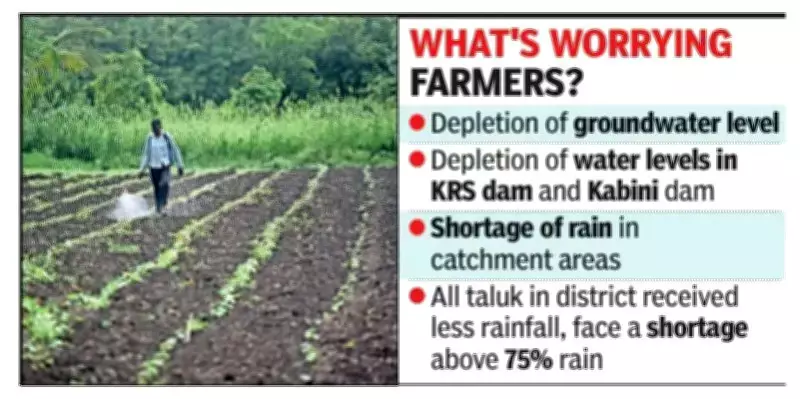
The rising temperatures have added to the woes. In April, the mercury touched 36 degrees Celsius, leading the government to declare the district as a heat wave-hit area. The depletion of groundwater levels, coupled with falling water levels in the Krishna Raja Sagara (KRS) dam (currently at 93 feet against the maximum of 124.8 feet) and the Kabini dam in HD Kote taluk, has further worried farmers about their agricultural activities in the coming months.
Speaking to TOI, Joint Director of Agriculture KH Ravi said that pre-kharif sowing has taken a severe hit this year due to the failure of pre-monsoon rains in April. He emphasized that the district needs a minimum of 30% to 40% of normal rainfall for sowing and land preparation. However, almost all taluks received less than 25% of the required rain. Despite the situation, the department has stocked sufficient seeds and fertilizers, ready for distribution at Raitha Samparka Kendras and authorized outlets for the upcoming kharif season.
Deputy Director of Horticulture Dr. Manjunath Angadi noted that the combination of high temperatures and rain shortage has affected mango growers, leading to a decline in yield this year in the district.
Taluk-wise Rainfall Deficit
According to taluk-wise data, HD Kote recorded the highest rainfall deficit of 96% in April, followed by Hunsur (91%), Saligrama (90%), Mysuru (88%), Nanjangud (87%), KR Nagar (85%), T Narasipura (82%), Periyapatna (79%), and Saragur (64%).
Farmers in the district are now pinning their hopes on the monsoon rains for the main kharif season, as the pre-kharif sowing has been largely unsuccessful this year.