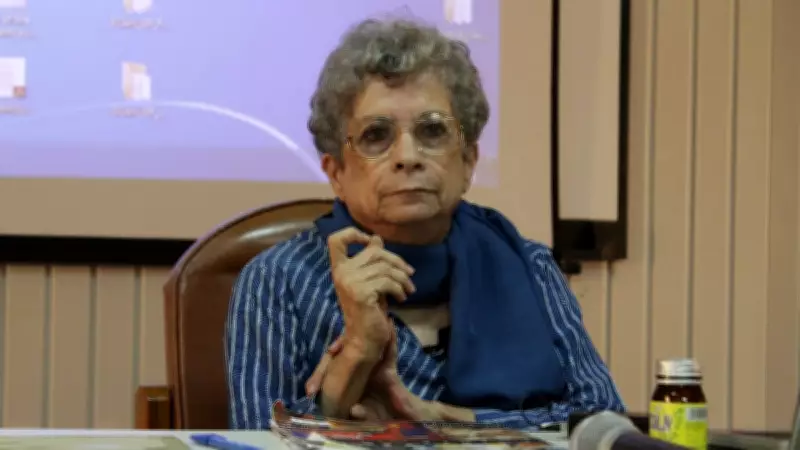
Eminent archaeologist Shereen Ratnagar, synonymous with Harappan history, passed away at the age of 82. Her expertise centered on the Indus Valley Civilization, particularly its trade networks and social organization. Ratnagar's work significantly advanced the understanding of one of the world's oldest urban cultures.
A Life Dedicated to the Indus Valley
Born in 1944, Ratnagar earned her PhD from the University of Mumbai and later taught at various institutions, including the Deccan College in Pune. She was widely recognized for her meticulous research on the trade links between the Indus Valley and Mesopotamia, highlighting the economic sophistication of the Harappan people.
Key Contributions
Ratnagar's seminal book, Encounters: The Westerly Trade of the Harappan Civilization, remains a cornerstone in the field. She argued that the Harappans were not isolated but engaged in extensive maritime and land-based trade. Her work also explored social hierarchies, urban planning, and the decline of the civilization.

- Trade Networks: Identified routes connecting Harappan cities to Persia and the Gulf region.
- Social Organization: Proposed that the society was relatively egalitarian compared to contemporary civilizations.
- Archaeological Methodology: Advocated for interdisciplinary approaches, combining archaeology with anthropology and history.
Recognition and Legacy
Ratnagar received numerous accolades, including the Indian Society for Prehistoric and Quaternary Studies Award. She was a fellow of the Indian Institute of Advanced Study. Her death marks the end of an era in Indian archaeology, but her scholarly contributions will continue to inspire future generations.
Reactions from the Academic Community
Colleagues and students have expressed deep sorrow. Dr. R. S. Bisht, a fellow archaeologist, called her "a pioneer who brought global attention to the Harappan civilization." The Prime Minister also paid tribute on social media, highlighting her role in preserving India's ancient heritage.
Ratnagar's work remains essential reading for anyone studying the Indus Valley Civilization. Her passing is a profound loss for the field of archaeology.