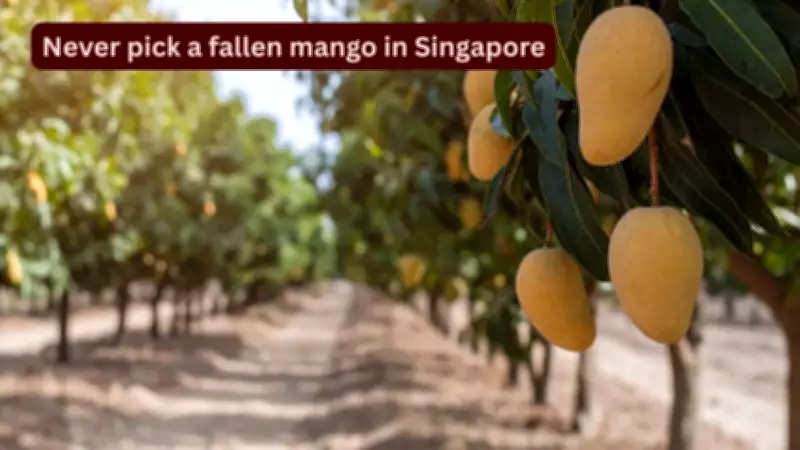
If you ever spot a mango lying on the ground in Singapore, think twice before picking it up. What may seem like a harmless travel moment can actually lead to several legal troubles, including hefty fines. Many first-time visitors are unaware of Singapore's 'mango laws,' but they are strictly enforced.
The 'Mango Laws' of Singapore
Singapore is known for its unique bans on items like chewing gum and durians. However, few tourists realize that mangoes are also subject to strict regulations. The Ministry of National Development (MND) states on its website: 'Trees, including their fruit, which are located on State land belong to the State. NParks manages most of the trees on State land. Members of the public who wish to pluck fruit from trees, or collect fruit that has dropped from trees on State land should approach NParks for permission. Those who pluck or collect fruit in a public park without permission can be fined up to S$5,000 under the Parks and Trees Act. Those who do so in a nature reserve or a national park can be fined up to S$50,000, and/or imprisoned for up to 6 months.'
Penalties for Ignoring the Rules
Singapore enforces these rules strictly. Offenders may face:

- Fines up to S$5,000 (approximately ₹3,63,000 to ₹3,74,000) in public parks.
- In protected zones like nature reserves, penalties can reach S$50,000 (around ₹12,50,000 to ₹12,56,000).
- Severe cases may include imprisonment for up to 6 months.
Fallen Fruit Is Not 'Free'
Many travelers assume that fruit on the ground is free to take, but in Singapore, even fallen mangoes are considered state property. Picking them up without permission is an offense. The logic is simple: the fruit is part of a managed ecosystem and a public resource.
What Travelers Should Know
For those visiting Singapore, it is crucial to follow these guidelines for mangoes, rambutans, or any fruit:
- Do not pluck fruit from trees.
- Avoid picking up fallen fruits.
- Never attempt to climb trees to harvest fruit.
- If curious, seek permission from NParks, though it is rarely granted for casual visitors.
Can You Bring Mangoes into Singapore?
According to the Singapore Food Agency (SFA), travelers can bring a small, reasonable quantity of fruits and vegetables (e.g., not more than 5 kg) for private consumption. However, fresh produce must be declared at customs upon arrival. Singapore has strict biosecurity laws to prevent pests and diseases. Failure to declare food items can result in confiscation, monetary fines, or penalties. Selling such items is prohibited.
So, travelers, beware of fallen fruit in Singapore. Resist the urge to pick it up. Instead, look, smile, take a picture, and move on—but do not pick it!