A significant earthquake with a preliminary magnitude of 6.7 jolted Taiwan on Monday, sending tremors across the island and parts of coastal China. The seismic event, which occurred at a considerable depth, did not prompt a tsunami warning, according to initial assessments by monitoring agencies.
Details of the Seismic Event
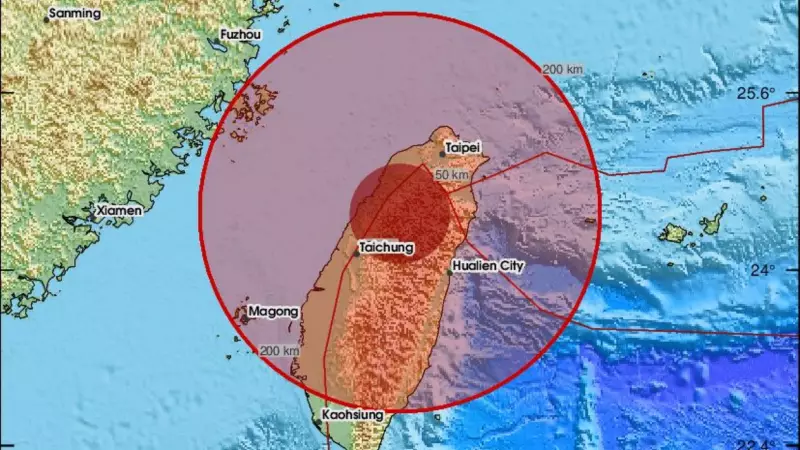
The United States Geological Survey (USGS) reported that the earthquake registered a magnitude of 6.7. The epicentre was located in the sea, approximately 28 kilometres south of Hualien city, a region on Taiwan's eastern coast that is no stranger to seismic activity. The quake struck at a depth of about 30 kilometres beneath the Earth's surface.
Initial reports from the European-Mediterranean Seismological Centre (EMSC) had placed the magnitude slightly higher at 6.9, but this was later revised to align with other agencies. The quake's tremors were strongly felt across Taiwan, including in the capital city of Taipei, where buildings swayed. Residents in coastal provinces of China, notably Fujian, also reported feeling the shaking.

Immediate Response and Impact Assessment
Following the tremor, Taiwanese authorities swiftly initiated standard emergency protocols. As of the first reports, there were no immediate accounts of significant damage or casualties. The Pacific Tsunami Warning Center confirmed that based on available data, no tsunami threat was expected from this earthquake.
Taiwan's location makes it highly susceptible to earthquakes. The island sits at the complex junction of two tectonic plates: the Philippine Sea Plate and the Eurasian Plate. This geological setting results in frequent seismic activity. The region near Hualien, in particular, has a history of powerful quakes, including a devastating tremor in 2018 that caused substantial damage and loss of life.
Context and Regional Seismic History
This latest event serves as a stark reminder of the persistent seismic risks in the region. Taiwan's sophisticated earthquake monitoring and building codes are regularly tested by such events. The quick dissemination of information by agencies like the USGS and EMSC is crucial for public safety and emergency response coordination.
While the initial impact appears limited, aftershocks are a common occurrence following a quake of this magnitude. Authorities and residents remain vigilant. The event underscores the importance of earthquake preparedness for nations situated along the volatile Pacific Ring of Fire, a belt known for its frequent earthquakes and volcanic eruptions.