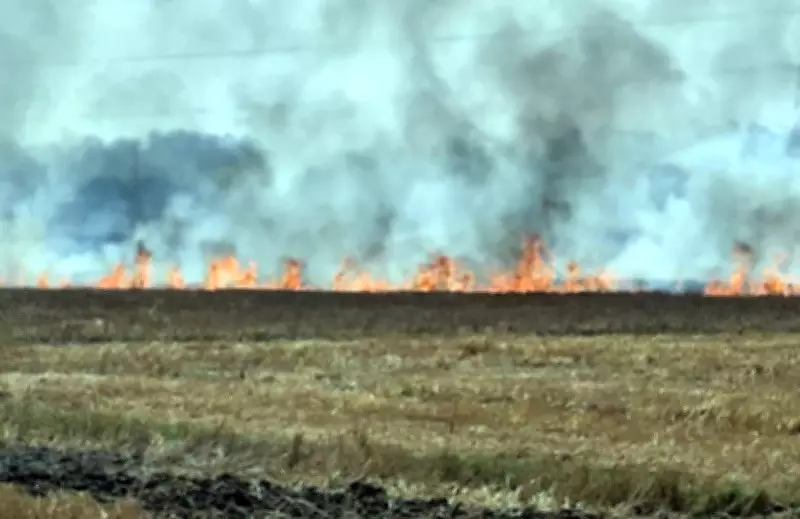
Stubble burning in and around Amritsar has taken a toll on the city's roadside green belts, with thick layers of ash and smoke damaging plants and trees. The practice, common during the wheat harvesting season, has led to a spike in air pollution levels, affecting both human health and the environment.
Impact on Green Belts
The green belts along major roads, which serve as lungs for the city, are bearing the brunt of the burning. Leaves of trees and shrubs are covered in soot, hindering photosynthesis and leading to stunted growth. Many plants have wilted or died due to the intense heat and toxic fumes.
Authorities' Response
The Municipal Corporation has deployed teams to monitor and prevent stubble burning, but the vast agricultural land surrounding the city makes enforcement challenging. Farmers often burn crop residue at night to avoid detection, causing severe smog in the mornings.

Environmentalists have urged the government to provide alternatives such as mechanized crop residue management and subsidies for stubble removal. They also call for stricter penalties for violators.
Health and Environmental Concerns
The burning releases harmful pollutants like carbon monoxide, nitrogen oxides, and particulate matter, which can cause respiratory issues and other health problems. The smoke also reduces visibility, leading to traffic hazards.
Efforts to create awareness among farmers about the long-term damage to soil fertility and the environment have had limited success. The district administration has set up a helpline for reporting incidents of stubble burning.