

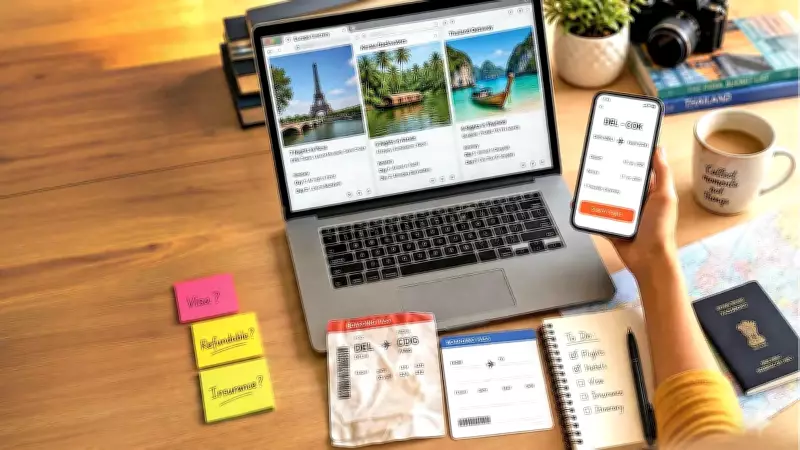
Amid the West Asia conflict, rising fuel prices, and international carriers reducing services to certain regions, travel is taking unexpected turns this summer. With reports suggesting a major airline may further trim schedules for June and July, where are our summer plans headed? “Do we plan, do we apply for a Schengen visa, do we take refundable tickets or opt for travel insurance?” Travellers ask, increasingly unsure of their plans.
“I wanted to travel to Europe this summer, but leave the visa aside – I’m not even sure if I can travel! Things are changing every day when it comes to travel. Even if one is ready to spend more than usual, I am not sure if routes are direct in this ever-changing environment,” says Hina Gupta (37), an analyst.
Well, aggregators and experts say travel intent remains strong. Despite some cancellations, travellers are still making plans – some opting for domestic trips, others choosing destinations not impacted by the conflict. Travel isn’t stopping; it’s simply becoming more cautious, more calculated, and costlier than before.

Short-haul and domestic trips gain as demand stays strong
Summer travel demand continues to remain strong, with a clear shift toward both high-demand domestic destinations and accessible international markets, points out Rikant Pittie. “On the domestic front, travellers are actively opting for cooler and scenic locations such as Kashmir, Himachal Pradesh, Uttarakhand, Kerala, Goa, and destinations across Northeast like Shillong and Gangtok. On the international side, there is a noticeable preference for short- to mid-haul destinations, with Thailand, Vietnam, Bali, and Sri Lanka seeing strong traction due to ease of access and value. At the same time, destinations like Japan and South Korea are also gaining popularity, particularly among younger travellers seeking more curated experiences. While the current environment has led to some adjustments in pricing and capacity, it has not deterred overall travel intent,” he adds.
As per Japan National Tourism Organisation, this March, visitors’ arrival numbers from India to Japan saw a 25.58% rise from last year.
International travel remains intact
Akash Rastogi, Director, Argosy Travels, Gurgaon, points out, “Despite these higher fares, we are observing that our High Net Worth Individual (HNI) travellers continue to book trips to destinations in Europe and places like Japan, Korea, Vietnam, and Thailand, for the upcoming summer season. We are also witnessing a shift toward domestic travel as a result of these increased international costs. International travel remains viable for those with the budget to cover the increased ticket costs.” Rajesh Magow, Co-founder & Group CEO, MakeMyTrip, says, “International travel has seen some impact due to the disruption in West Asia. However, Southeast Asian destinations, most notably Thailand, Japan, Singapore, Maldives, and closer home, Sri Lanka and Nepal, are seeing an uptick in interest. Our data also points to shorter purchase windows, with travellers keeping their options open and delaying final booking decisions until closer to the travel date.”
We are seeing strong inquiries as well as conversions for destinations like Munnar, Kashmir, Shillong, Andaman & Nicobar, Kodaikanal and Ladakh, shares Rajiv Mehra, General Secretary, Federation of Associations in Indian Tourism and Hospitality (FAITH). “These are considered premium destinations, and people who would otherwise have travelled internationally are opting for these.”

Data from Cleartrip’s PeekABoo highlights
- Gen Z and solo women lead a significant shift in India’s travel landscape, as the rise of Tier 2 hubs and Northeast destinations outpaces traditional favourites (Solo women bookings up 31.9%)
- Air bookings grew by over 20%, Bus by over 35%, and Hotels by over 80%, with Family hotel bookings jumped 124.9%
- Payment trends show a strong preference for credit cards – 63.1% of domestic bookings and 48.9% of international bookings
- Bengaluru emerged as the popular choice among Gen Z and Millennials, and Bali led internationally.
- Overall, solo female travel within India grew by 21.1%, and international solo male travel rose by 35.8%





