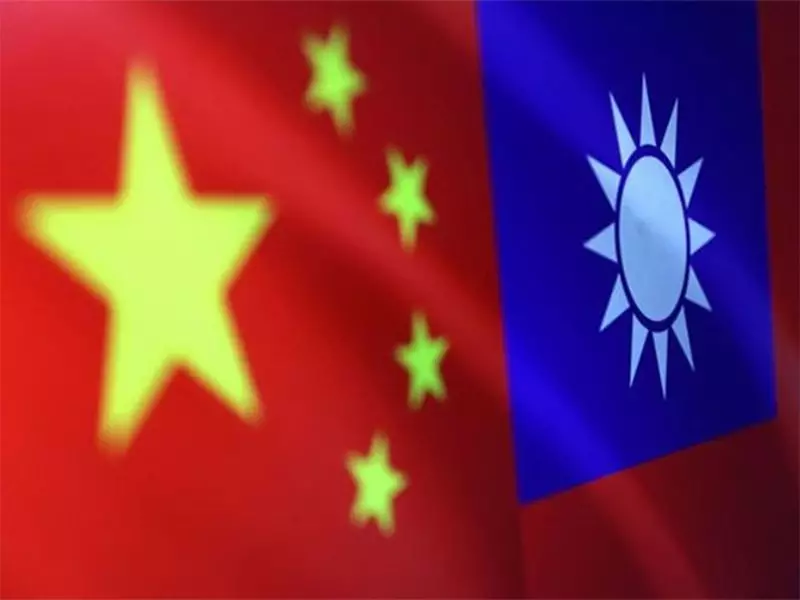
Taiwan has launched a sharp rebuke against China, accusing its larger neighbour of engaging in what it terms 'transnational suppression'. This strong allegation comes in direct response to claims made by Chinese authorities that they recently cracked a case involving the illegal smuggling of submarine communication cables to Taiwan.
Beijing's Allegations and Taipei's Furious Rebuttal
The controversy ignited when China's Ministry of State Security announced on its official WeChat account that it had successfully uncovered and stopped a clandestine operation. According to the Chinese claim, the operation involved a specific Taiwanese company allegedly attempting to procure a sophisticated undersea cable through illegal channels. Beijing stated this activity violated mainland China's export control laws and posed a threat to national security.
In a swift and forceful response, Taiwan's Mainland Affairs Council (MAC) categorically denied these allegations. The council dismissed Beijing's narrative as a complete 'fabrication' designed solely to intimidate and suppress Taiwanese businesses and individuals. Officials in Taipei argued that this incident is a clear example of China overreaching its jurisdiction and applying its domestic laws beyond its borders to target Taiwan, which it views as a self-governing democracy.

A Pattern of Pressure in the Taiwan Strait
This diplomatic spat is not an isolated event but fits into a broader pattern of escalating tensions. The Taiwan Strait, a crucial waterway separating the island from mainland China, has become a focal point of geopolitical friction. China consistently asserts its claim over Taiwan, refusing to rule out the use of force for reunification. In contrast, Taiwan's government maintains that only its people have the right to decide their future.
The accusation of 'transnational suppression' is particularly significant. It suggests that Taiwan perceives China's actions as part of a coordinated global campaign to isolate and pressure the island nation. This includes efforts to limit Taiwan's international participation, sway its political landscape, and, as alleged in this case, interfere with its technological and infrastructural development by targeting private commercial activities.
Implications for Regional Stability and Business
The fallout from this incident extends beyond diplomatic name-calling. It raises serious concerns about the stability of the region and the operational risks for multinational corporations. Undersea cables are the backbone of global internet and telecommunications, and their security is paramount. When geopolitical conflicts spill over into critical infrastructure domains, it creates uncertainty for international businesses operating in or with Taiwan.
Furthermore, Taiwan's strong rebuttal signals its determination to push back against what it sees as Beijing's coercive tactics. By publicly labelling the actions as suppression, Taipei aims to rally domestic support and draw international attention to the pressures it faces. This ongoing tit-for-tat underscores the deep-seated lack of trust and the volatile nature of cross-strait relations, where a dispute over commercial equipment can quickly escalate into a major diplomatic confrontation.
As both sides dig in their heels, the path to dialogue appears increasingly fraught. The submarine cable controversy serves as a stark reminder that in the Taiwan Strait, even technical and commercial matters are deeply entangled with high-stakes politics and national identity.