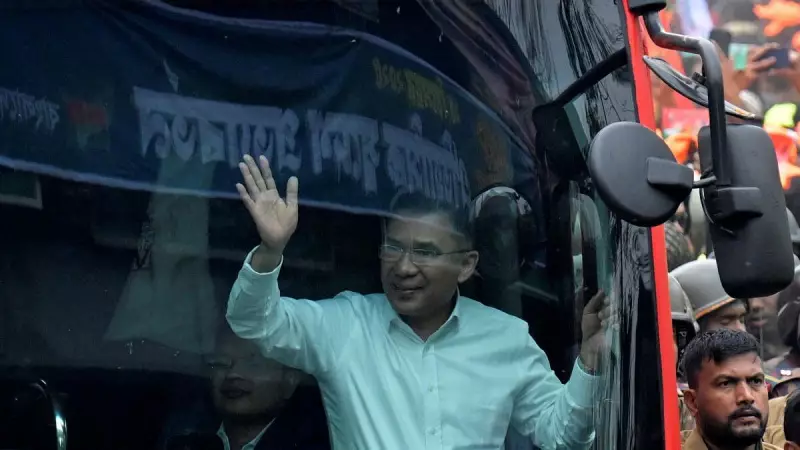
In a significant political development, Tarique Rahman, the acting chairman of the Bangladesh Nationalist Party (BNP), has officially registered as a voter in Bangladesh. This move comes after he spent 17 years living abroad in self-exile.
High-Stakes Registration Under Tight Security
The registration process was conducted at the office of the Bangladesh Election Commission (EC). Authorities left nothing to chance regarding security for the high-profile event. A multi-layered security blanket was thrown around the EC office premises to ensure the procedure went smoothly without any incidents.
The security detail included personnel from several elite and regular forces. Members of the Bangladesh Army, the Rapid Action Battalion (RAB), Ansar, and the police were strategically deployed both inside and around the area. Officials described the arrangements as foolproof, aimed at preventing any untoward situation.

A Return After Nearly Two Decades
Tarique Rahman, the elder son of BNP founder and former President Ziaur Rahman, has been a central figure in Bangladeshi politics despite his physical absence. He left the country years ago and has been operating as the party's acting chairman from overseas. His return to the electoral roll, even if not a physical return to the country, marks a pivotal moment.
The voter registration on 27 December 2025, signals a potential new chapter for both Rahman and the BNP, which is the primary opposition party in the country. This administrative step is often seen as a prerequisite for more direct political engagement.
Political Implications and Future Scenarios
This development is likely to have wide-ranging repercussions in Bangladesh's volatile political landscape. Analysts are watching closely to see if this is a precursor to Tarique Rahman making a physical return to Bangladesh. His legal status and several pending cases against him have been major points of contention.
For the BNP and its supporters, the registration could be a morale booster and a step towards consolidating the party's position ahead of future electoral battles. For the government and ruling party, it presents a new dynamic to consider in their political strategy.
The event underscores the ongoing tensions and the high-security environment that surrounds major political activities in Dhaka. The deployment of such a significant force for a voter registration act highlights the sensitivity and perceived importance of the event.