

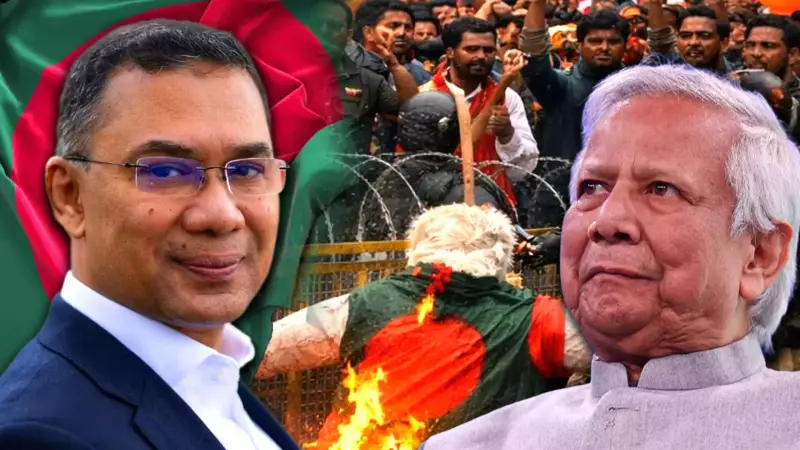
In a move that could dramatically alter the political landscape of Bangladesh, Tarique Rahman, the acting chairman of the Bangladesh Nationalist Party (BNP), has returned to Dhaka. His arrival on December 25, 2025, marks the end of a 17-year period of exile, a chapter defined by legal battles, convictions, and political absence from his homeland.
A Political Heir Comes Home
Rahman, widely seen as the most powerful political heir in the country, landed in the capital amid a climate of significant political flux. His return coincides with a period of rising public unrest and a notable vacuum, created by the absence of Prime Minister Sheikh Hasina's Awami League from the immediate electoral fray. For nearly two decades, Rahman has led the BNP from overseas, navigating a complex web of court cases that have shaped his and his party's destiny.
The Context of Uncertainty
The timing of his homecoming is critical. Bangladesh is preparing for its first major national election in decades without the towering presence of Sheikh Hasina as a candidate. Furthermore, the BNP's chairperson and Rahman's mother, Khaleda Zia, remains in poor health, unable to lead the party actively. This confluence of factors has placed the BNP at a crossroads, and the party is now placing a substantial bet on Rahman's ability to mobilise support and lead from the front lines.

Within his party, supporters view Tarique Rahman as a crucial unifier, a figure who can consolidate the opposition and channel widespread discontent into a viable electoral challenge. They believe his physical presence is essential to revitalise the party's grassroots and offer a direct alternative to the ruling establishment.
Reactions and Potential Ramifications
However, his return is not without controversy. Critics and political observers express deep concern that his arrival could fuel renewed instability and polarisation. They point to the existing climate of violence and uncertainty, suggesting that a fiercely contested election with Rahman at the helm of the main opposition could exacerbate tensions.
The central question now gripping Bangladesh is whether Rahman's return will inject new energy into a democratic process or deepen the nation's political divisions. With the Awami League not in the electoral arena in the same way, the political battlefield has fundamentally shifted. The BNP's strategy hinges on Rahman's capacity to connect with the electorate directly and present a compelling vision for the country's future.
As Bangladesh stands on the precipice of a new political era, the comeback of Tarique Rahman is more than a personal journey; it is a seismic event with the power to redefine alliances, strategies, and the very direction of the nation. The coming weeks will reveal whether his homecoming marks the beginning of a resurgent opposition or a period of intensified political confrontation.






