

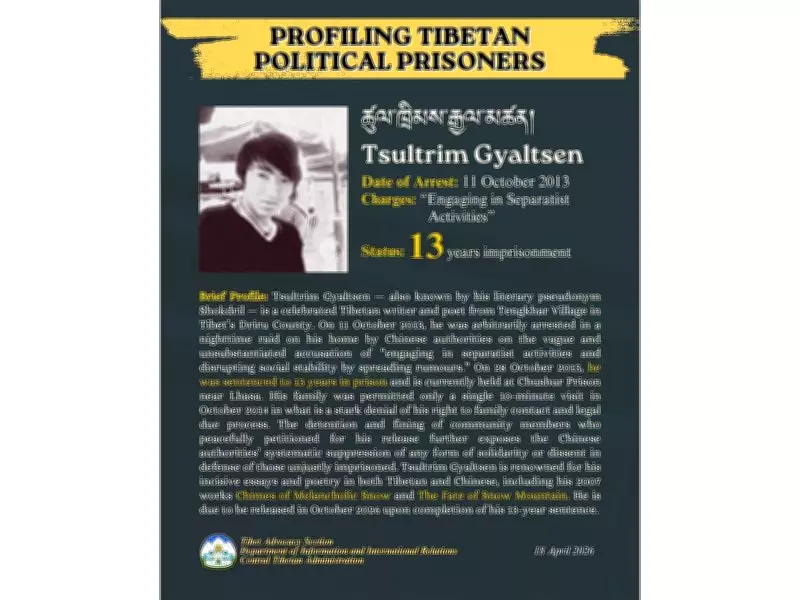
CTA Draws Attention to Tibetan Political Prisoner Tsultrim Gyaltsen Ahead of 2026 Release
The Central Tibetan Administration (CTA) has recently intensified its advocacy efforts by highlighting the case of Tsultrim Gyaltsen, a Tibetan political prisoner who has been incarcerated since 2008. This move comes as his expected release date approaches in 2026, with the CTA aiming to amplify international awareness and scrutiny of human rights violations in Tibet.
Background and Imprisonment Details
Tsultrim Gyaltsen was arrested in 2008 during a period of widespread protests across Tibet, which were part of a larger movement advocating for greater autonomy and cultural preservation. He was subsequently convicted on charges related to political dissent and has been serving a lengthy prison sentence in China. The CTA reports that his detention has been marked by harsh conditions and limited access to legal resources, raising significant concerns about due process and fair treatment.
Over the years, human rights organizations have documented numerous cases of Tibetan activists facing similar fates, with many subjected to arbitrary detention and torture. Gyaltsen's case is emblematic of these broader patterns, underscoring the ongoing challenges faced by Tibetans under Chinese rule.

CTA's Advocacy and International Calls
In preparation for his anticipated release in 2026, the CTA has launched a campaign to bring Gyaltsen's plight to the forefront of global discourse. This initiative includes:
- Issuing detailed reports on his imprisonment and the legal irregularities surrounding his case.
- Engaging with international bodies such as the United Nations to seek intervention and pressure on China.
- Mobilizing Tibetan diaspora communities to advocate for his cause through protests and awareness drives.
The CTA emphasizes that highlighting Gyaltsen's story is not only about securing his freedom but also about shedding light on the systemic oppression of Tibetan political prisoners. They argue that international attention is crucial to holding authorities accountable and preventing further abuses.
Human Rights Context and Broader Implications
This case occurs against a backdrop of persistent human rights concerns in Tibet, where reports of religious persecution, cultural suppression, and political repression are common. The CTA's focus on Gyaltsen aims to catalyze a broader discussion on these issues, urging the global community to:
- Monitor the conditions of Tibetan prisoners and ensure their rights are upheld.
- Support efforts for transparency and justice in cases involving political detainees.
- Advocate for policy changes that respect Tibetan autonomy and cultural identity.
Experts note that such advocacy can influence diplomatic relations and human rights policies, potentially leading to improved conditions for prisoners like Gyaltsen. However, challenges remain due to China's firm stance on its territorial integrity and internal affairs.
Looking Ahead to 2026
As 2026 approaches, the CTA plans to continue its efforts, with a focus on ensuring Gyaltsen's safe and unconditional release. They call on governments, NGOs, and individuals worldwide to join in this cause, emphasizing that every voice counts in the fight for justice and human dignity.
The spotlight on Tsultrim Gyaltsen serves as a poignant reminder of the ongoing struggles in Tibet and the importance of sustained international engagement. By keeping his case in the public eye, the CTA hopes to not only secure his freedom but also inspire broader change for all Tibetans facing similar hardships.






