

Tokyo's 'Bumping Man' Phenomenon: A Rising Tide of Gender-Based Harassment
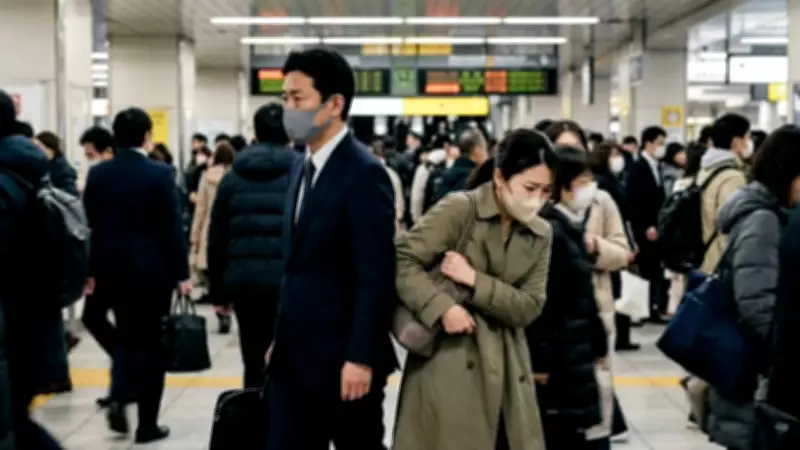
In the intricate network of trains, buses, and subway stations that define Tokyo's urban landscape, a disturbing and long-obscured form of gender-based harassment known as Butsukari Otoko, or 'bumping man,' is experiencing a significant increase. This specific type of violence occurs when men deliberately and intentionally bump into women within the crowded confines of train stations during the hectic rush hour periods. These perpetrators exploit the dense anonymity provided by the surrounding crowds to conceal their blatant acts of physical aggression from other commuters and bystanders in the immediate area.
Butsukari Otoko: Unmasking the Gendered Power Dynamic
While many casual observers might dismiss these actions as merely unfortunate byproducts of increasing urban density in Japanese cities, sociological research indicates a far more sinister motivation rooted in frustration and a desire for power. The behavior is not accidental but calculated. Most of these men specifically target individuals they perceive as weaker or less likely to retaliate—often women, the elderly, or people distracted by their mobile phones. By doing so, they manipulate the established social norms and etiquette prevalent in Japanese culture to engage in a form of hit-and-run style harassment against women.
This leaves victims with profound and long-lasting psychological damage, fostering feelings of increased vulnerability and anxiety. Skewed power dynamics, rather than simple overcrowding, are the core driver behind this phenomenon. Sociologists from Japan Women's University have identified that offenders are typically middle-aged males who use the chaotic station environment as an outlet for personal frustrations. They exert a sense of power and dominance that they feel is denied to them within rigid corporate hierarchies or due to social alienation. Therefore, this behavior should be classified not as random misfortune but as a targeted act of gender-based aggression.

The Erosion of Female Agency and Safety in Public Spaces
The impact on victims extends far beyond the immediate physical contact. They endure lasting effects, including what scholars describe as chronic 'vigilance fatigue.' Analysis published in the International Journal of Japanese Sociology explains that these calculated acts of non-verbal intimidation are part of a continuum of micro-aggressions that characterize many urban encounters between men and women on public transportation systems.
The constant requirement for women to scan their surroundings and remain hyper-aware in crowded spaces significantly elevates their anxiety levels. This perpetual state of alertness effectively limits their freedom and ability to use public spaces comfortably and without fear. The repeated invasion of personal space by strangers sends an implicit, yet powerfully clear, message: a woman's psychological safety and bodily autonomy are secondary to a perpetrator's assertion of spatial dominance and control.
Legal Hurdles: The Role of Surveillance and Prosecution Challenges
For victims of Butsukari Otoko, navigating the Japanese legal system presents formidable obstacles, primarily due to the complexities of proving intent under the Japanese Penal Code. According to documentation from the National Police Agency, these incidents are often categorized as assaults or public nuisances. However, for a successful prosecution, authorities must prove beyond a reasonable doubt that the collision was intentional and not merely a consequence of extreme congestion, where station capacity frequently exceeds 150 percent during peak hours.
The perpetrators typically benefit from plausible deniability, arguing they were simply part of a massive crowd during rush hour. Unless high-quality closed-circuit television (CCTV) footage provides solid evidence of a conscious, deliberate change in the perpetrator's path directly toward the victim, these incidents rarely get formally reported or lead to prosecution. This evidentiary gap creates a significant barrier to justice, allowing the cycle of harassment to continue with impunity in Tokyo's bustling transit hubs.






