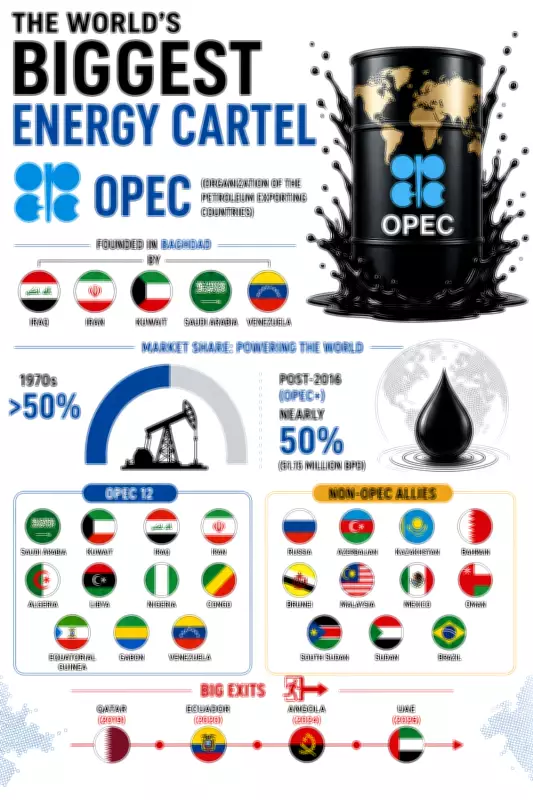
The United Arab Emirates (UAE) announced on Tuesday that it would leave the Organization of the Petroleum Exporting Countries (OPEC) effective May 1, granting the nation autonomy to produce and sell oil without adhering to the group's collective decisions. Experts suggest that while this move is unlikely to significantly impact India in the short term, it could yield long-term advantages as the UAE operates free from OPEC's production constraints.
India's Dependence on Oil Imports
India imports over 85% of its crude oil requirements, making any shift in global oil dynamics critical. The UAE is a key supplier, accounting for roughly 9% of India's crude imports. Even when supply chains remain stable, changes in Gulf oil politics can ripple through fuel prices, inflation, and the nation's overall energy security.
Short-Term Stability, Long-Term Potential
In the immediate future, analysts do not foresee major disruptions. The UAE's exit from OPEC may lead to increased production, potentially stabilizing or lowering global prices. For India, this could mean more competitive pricing and diversified supply sources. Over time, the UAE's independence could foster bilateral energy deals, enhancing India's strategic oil reserves and reducing vulnerability to OPEC's quota decisions.

India has been actively strengthening energy ties with the UAE, including investments in refineries and storage facilities. The UAE's departure from OPEC might accelerate such collaborations, offering India greater flexibility in negotiating long-term contracts. However, the global oil market remains volatile, and India must continue to monitor geopolitical shifts to safeguard its energy interests.