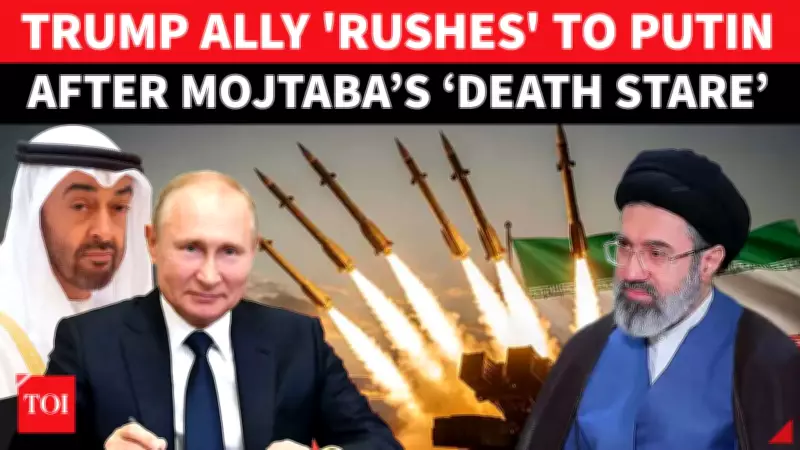
While the United States and Israel navigate a volatile military standoff with Iran, Russian President Vladimir Putin is playing the ultimate diplomatic card. In a critical phone call, UAE President Mohammed bin Zayed personally assured Putin that Emirati territory is not being used to launch attacks against Iran. With UAE infrastructure taking a brutal beating from Iranian retaliatory strikes, Putin has offered to act as a direct backchannel messenger to Tehran.
UAE's Plea for Mediation
As Washington beats the drums of war, Moscow is proving it is the only major power that can still speak to all sides. The UAE, a key US ally in the region, has found itself caught in the crossfire of escalating tensions between Iran and the US-led coalition. Iranian forces have reportedly fired warning shots near UAE vessels and targeted infrastructure, prompting Abu Dhabi to seek urgent diplomatic intervention.
Putin's Role as Intermediary
Putin, who maintains strong ties with both Iran and the UAE, has positioned himself as an indispensable mediator. During the phone call, he assured MBZ that he would convey the UAE's position to Iranian Supreme Leader Ali Khamenei. This move underscores Moscow's growing influence in the Middle East, even as the US and Israel ramp up military posturing.

Iran's Warning Shots
Iran's Islamic Revolutionary Guard Corps (IRGC) issued what it called final warning shots to the UAE, accusing it of allowing its territory to be used for attacks against Iran. The UAE has denied these allegations, with MBZ emphasizing to Putin that Emirati soil remains neutral. Despite this, Iranian strikes have damaged key infrastructure in the UAE, raising fears of a wider conflict.
US-Israel Tensions with Iran
The backdrop to this diplomatic maneuvering is a tense standoff between Iran and the US-Israel axis. The US has deployed additional naval assets to the region, while Israel has conducted covert operations against Iranian nuclear facilities. In response, Iran has threatened to close the Strait of Hormuz, a critical chokepoint for global oil shipments.
Global Implications
The crisis has drawn in major powers, with China also expressing support for Iran's position on the Hormuz Strait. The UAE's plea to Putin highlights the limits of US influence in the region, as even its closest allies seek alternative channels to de-escalate tensions. Putin's offer to mediate could provide a face-saving exit for all parties, but it remains to be seen whether Iran will accept Russian intervention.
As the situation continues to unfold, the world watches to see if diplomacy can prevail over military confrontation. Putin's role as a backchannel messenger may be the key to preventing a full-scale war in the Middle East.