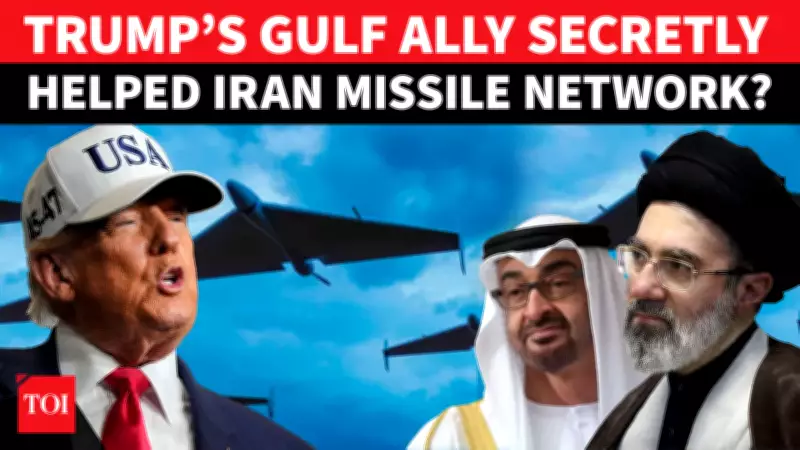
A massive intelligence leak uncovered by the Financial Times has exposed how Iran's Islamic Revolutionary Guard Corps (IRGC) secretly operated an advanced military procurement network through the United Arab Emirates. The revelations have stunned both the United States and Israel, highlighting a significant breach in regional security alliances.
The Secret Network Uncovered
According to the leaked documents, the IRGC used a shell company named Telesun, based in Ras al Khaimah, to smuggle nearly 1.8 tonnes of advanced Chinese-made satellite antenna technology. The hardware was transported from Shanghai to Bandar Abbas, Iran, where it was immediately integrated into Iran's long-range drone and missile tracking systems. This dual-use technology, while ostensibly for civilian purposes, has critical military applications.
How the Smuggling Operation Worked
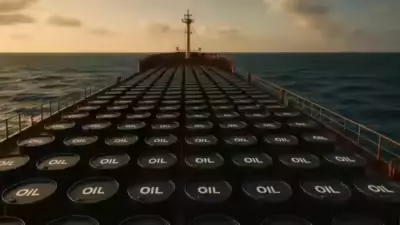
To evade Western surveillance, an Iranian ghost vessel named the Rama III was employed. The ship faked its GPS coordinates near Oman, allowing it to slip past naval blockades undetected. The operation involved careful planning and coordination, exploiting gaps in maritime monitoring systems. The leaked intelligence suggests that the UAE's role may have been more than passive, raising questions about the extent of complicity.

Implications for Regional Security
The leak has sent shockwaves through diplomatic circles. The UAE, a key ally of the United States and part of the Abraham Accords, has traditionally been seen as a counterbalance to Iranian influence. This revelation could strain relations between Washington and Abu Dhabi, while emboldening Tehran. Israel, which views Iran's missile and drone programs as an existential threat, has expressed deep concern.
Expert Analysis
Security analysts note that the smuggled technology significantly enhances Iran's ability to track and target moving objects, including aircraft and naval vessels. This development could alter the strategic balance in the Middle East, potentially escalating tensions. The IRGC's use of front companies and ghost ships demonstrates a sophisticated approach to sanctions evasion.
The Financial Times report has prompted calls for a full investigation. The United States has not yet officially commented, but intelligence agencies are reportedly reviewing the documents. Meanwhile, Iran has denied any wrongdoing, dismissing the leak as fabricated propaganda.
What Happens Next?
The leak is likely to dominate discussions at upcoming security summits. The UAE may face pressure to explain its role, while Iran could leverage the situation to project strength. The incident underscores the challenges of enforcing sanctions in an interconnected world, where dual-use technologies can easily cross borders.
For now, the focus remains on verifying the authenticity of the leaked documents and assessing the full scope of the network. As more details emerge, the geopolitical fallout is expected to intensify, reshaping alliances in the region.