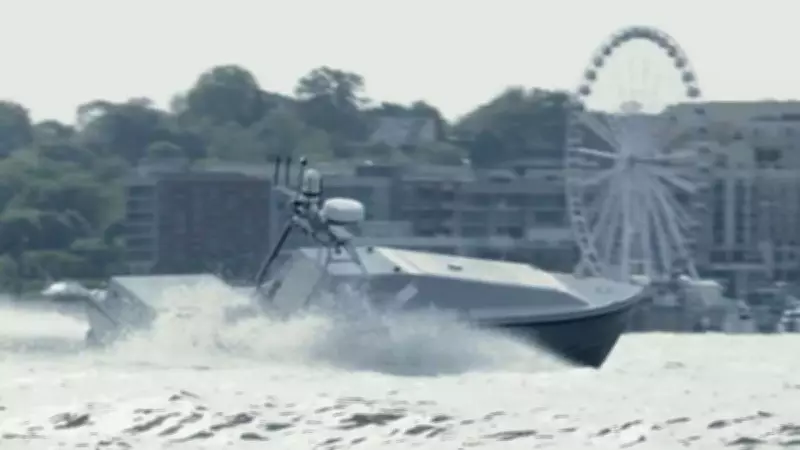
The US Navy's autonomous vessel, the Saronic Corsair, successfully rescued two pilots after their Apache attack helicopter crashed near the Strait of Hormuz. The incident occurred on June 10, 2026, highlighting the growing role of unmanned systems in naval operations.
Details of the Rescue Mission
The Apache helicopter, part of a routine training exercise, experienced a mechanical failure and went down in the waters near the strategic waterway. The Saronic Corsair, a drone boat designed for surveillance and rescue, was dispatched to the scene. It located the pilots within minutes and deployed life rafts, ensuring their safe retrieval.
The pilots were reported to be in stable condition and were transferred to a nearby naval base for medical evaluation. The US Navy praised the efficiency of the unmanned system, which operated without direct human intervention.

What is the Saronic Corsair?
The Saronic Corsair is an unmanned surface vessel (USV) developed by the US Navy. It is designed for a variety of missions, including intelligence gathering, surveillance, reconnaissance, and search and rescue. Key features include:
- Autonomous operation: Capable of executing pre-programmed missions without a crew.
- Advanced sensors: Equipped with radar, cameras, and communication systems for real-time data transmission.
- Speed and endurance: Can travel at high speeds and operate for extended periods.
- Modular design: Can be fitted with different payloads for specific tasks.
The vessel is part of the Navy's push to integrate unmanned systems into its fleet, reducing risk to human personnel and expanding operational capabilities.
Strategic Importance of the Strait of Hormuz
The Strait of Hormuz is a critical chokepoint for global oil shipments, with about 20% of the world's petroleum passing through it. The US Navy maintains a strong presence in the region to ensure freedom of navigation and respond to emergencies. The successful rescue underscores the importance of advanced technology in safeguarding lives and maintaining security in volatile areas.
This incident also highlights the potential for unmanned systems to conduct dangerous rescue operations, minimizing human exposure to hazards. The Saronic Corsair's performance has been lauded as a significant step forward in naval robotics.