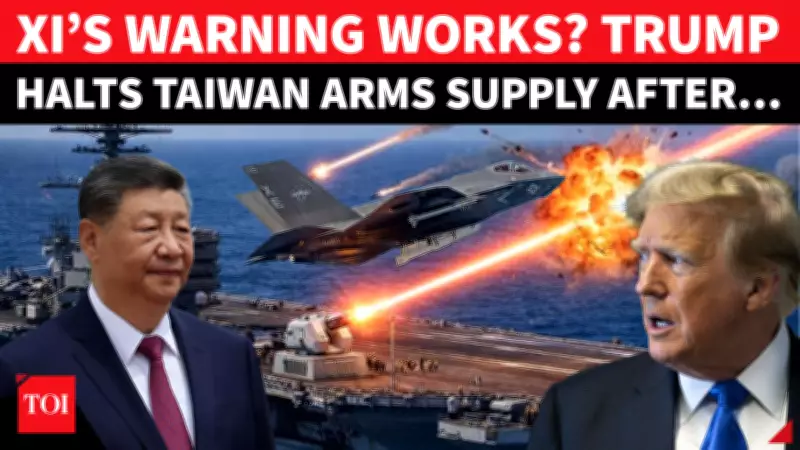
The United States has paused a proposed $14 billion arms sale to Taiwan, following a warning from China, triggering fresh geopolitical shockwaves. A top US Navy official stated that Washington is delaying the massive weapons package to preserve munitions linked to America's military requirements in the Iran war. The move comes days after former President Donald Trump and Chinese President Xi Jinping discussed Taiwan during talks in Beijing, while China renewed its opposition to US arms sales to Taipei.
Reasons Behind the Pause
The official cited the need to maintain adequate inventory for ongoing operations in the Middle East, particularly related to the Iran conflict. This decision has raised questions about whether the pause is driven by military necessity, pressure from China, or a broader shift in US strategic priorities.
Taiwan's Response
Taiwan has stated that it has received no official notice of any adjustment to the arms deal. The island's government remains uncertain about the implications of the delay, which could affect its defense capabilities against potential threats from China.

Geopolitical Implications
The pause has sparked intense debate among analysts. Some view it as a temporary measure due to inventory constraints, while others see it as a sign of US-China diplomacy influencing arms sales. The discussion between Trump and Xi in Beijing highlighted the sensitivity of the Taiwan issue, with China consistently opposing any foreign arms sales to the island.
What This Means for US Strategy
The decision could indicate a recalibration of US foreign policy in the Asia-Pacific region. Whether it is a response to China's backlash, a logistical necessity, or a strategic shift remains to be seen. The full breakdown of the escalating Taiwan arms controversy continues to unfold.