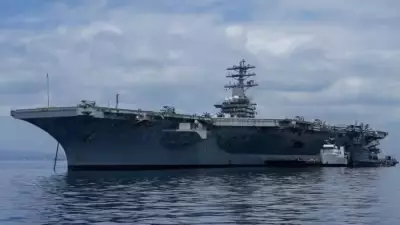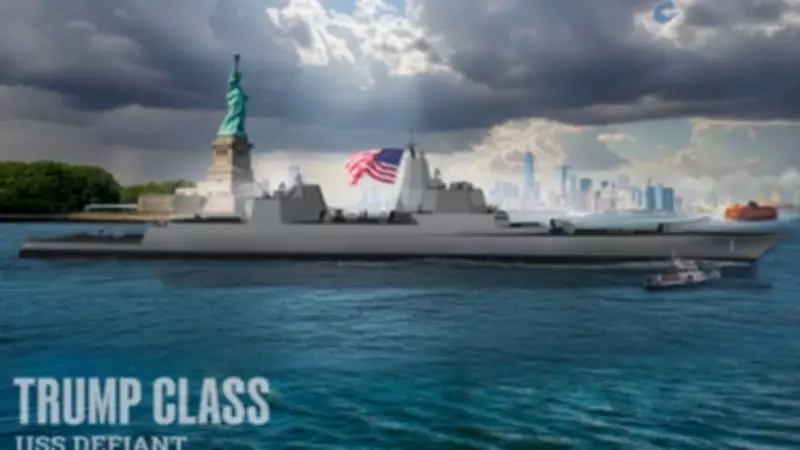
The United States Navy is bringing battleships back as a cornerstone of its maritime strategy, a move that comes as India contemplates acquiring additional aircraft carriers. President Donald Trump announced in December 2025 that the US would relaunch battleships, and according to Bloomberg, the Navy now plans to commission 15 such vessels by 2055.
Historical Context and Strategic Shift
The last US battleship, the USS Missouri, entered service in 1944 and was retired in 1992. The revival is intended to complement the Navy's aircraft carrier-centric approach to projecting power at sea. Modern battleships are seen as a response to evolving naval warfare demands, where distributed forces provide reach and sensing but still require concentrated combat power for decisive outcomes. The Arleigh Burke-class destroyer, while highly capable, has reached practical limits, and even the planned next-generation destroyer involves compromises, according to a US Navy report.
China's Naval Expansion
The development occurs as the Chinese People's Liberation Army Navy (PLAN) has become the world's largest navy by ship count. Although the US Navy remains the largest by tonnage, experts increasingly view missile-launch capacity as a more credible indicator of naval power. Vertical Launch System (VLS) cells are a key measure of lethality. The US Navy has 8,400 VLS cells, nearly double the 4,300 of the PLAN on surface vessels, according to the International Institute for Strategic Studies. Submarine VLS cells are not counted separately due to strategic weapons integration.

Capabilities of the Proposed Battleship
The proposed nuclear-powered battleship is designed for greater endurance, higher speed, and the ability to host advanced weapon systems, placing it at the top tier of the US fleet's high-low mix. Its primary role is conducting long-range, high-volume offensive strikes while serving as a survivable forward command-and-control platform in a conflict with a major power like China.
Advanced Weapon Systems
The battleship's expanded size and energy capacity offer several operational advantages. Advanced Payload Modules and space for futuristic missiles fired through VLS would allow integration of hypersonic weapons and other strike capabilities beyond current limits. Increased power generation from onboard nuclear reactors supports operations across the electromagnetic spectrum, including electronic warfare and directed-energy weapons such as lasers.
Command and Control
The ship's internal volume would also allow embarkation of fleet command staff, enabling it to function as a flagship and tactical command-and-control hub for Surface Action Groups, Carrier Strike Groups, or independent missions. By avoiding design constraints of current vessels, the new battleship class could provide greater flexibility for integrating emerging technologies.
Strategic Signalling and Acquisition Plan
The arrival of such a vessel in contested waters or allied ports would carry strategic signalling value comparable to that of aircraft carriers. The acquisition plan incorporates lessons from past naval programmes by using digital engineering, modular construction, and AI-enabled design tools to reduce costs and minimize delays. This is significant as the US Navy is already behind schedule on its aircraft carrier programme, with three vessels currently under construction.
The TOI News Desk comprises a dedicated team of journalists operating around the clock to deliver current and comprehensive news to readers of The Times of India worldwide.