

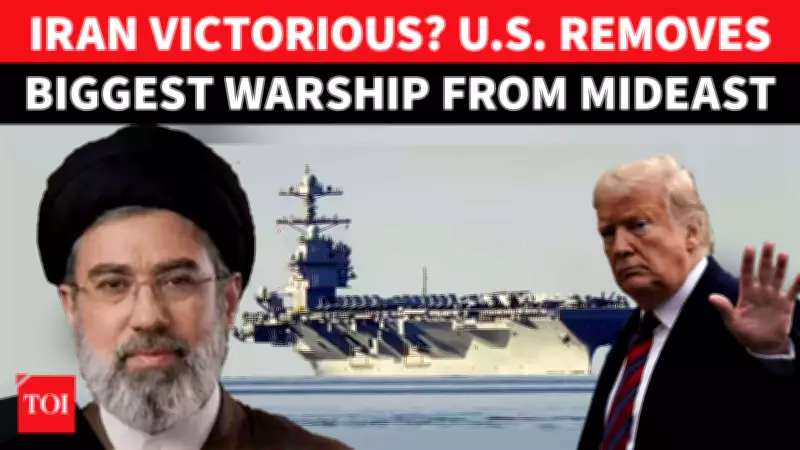
The United States is implementing a significant change in its military stance in the Middle East. According to The Washington Post, the USS Gerald R. Ford, the largest and most technologically advanced aircraft carrier in the world, is expected to return to its home port after a 10-month deployment. The carrier was initially deployed amid escalating tensions with Iran and has served as a formidable symbol of American deterrence in the region.
Strategic Implications of the Withdrawal
The anticipated withdrawal of the USS Gerald Ford raises critical questions about Washington's future intentions. Is this a move toward de-escalation, or is it a calculated strategic repositioning? The warship, currently operating in the Red Sea, has experienced operational strain due to one of the longest deployments for a modern U.S. carrier. Its departure could represent a notable reduction in American military firepower at a time when ceasefire dynamics remain delicate and unpredictable.
Operational Context
The USS Gerald R. Ford was deployed as part of a broader effort to deter Iranian aggression and reassure allies in the region. Its presence has been a key component of U.S. naval power projection. However, the extended deployment has placed significant stress on the crew and the vessel's systems. The decision to bring the carrier home may reflect a need for maintenance and crew rest, as well as a reassessment of force posture in the Middle East.

Regional Reactions and Future Outlook
The withdrawal is likely to be closely watched by regional actors, including Iran, Israel, and Gulf states. Some may interpret it as a sign of reduced U.S. commitment, while others may see it as an opportunity for diplomatic engagement. The Biden administration has not yet officially commented on the timeline for the carrier's return, but the report suggests that preparations for departure are underway.
As the USS Gerald Ford prepares to leave, the U.S. Navy may rotate other assets into the region to maintain a presence. However, the loss of the Ford's advanced capabilities will be felt. The coming weeks will reveal whether this move is part of a broader strategy to recalibrate U.S. military commitments in the Middle East or a temporary adjustment.






