

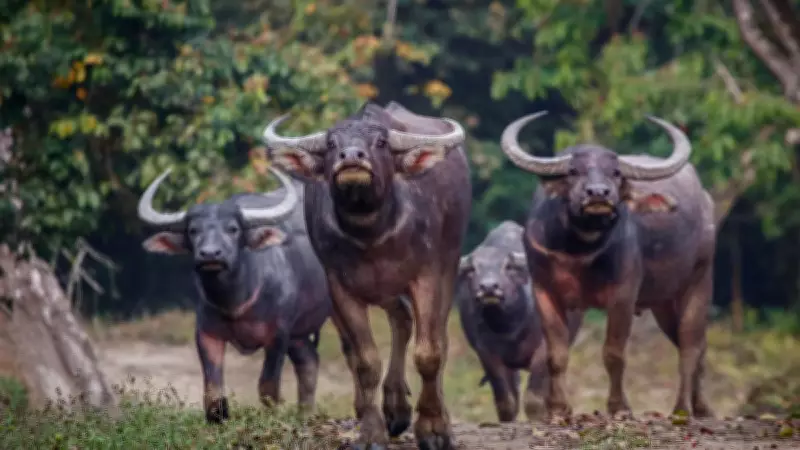
The endangered Asiatic wild water buffalo has been successfully reintroduced in Kanha Tiger Reserve in Madhya Pradesh after a journey of over 2,000 kilometers from Kaziranga National Park in Assam. This marks a significant conservation milestone for the species, which is classified as endangered by the International Union for Conservation of Nature (IUCN).
Historic Translocation Effort
Wildlife officials from both states collaborated on the complex operation, which involved capturing a group of buffaloes from Kaziranga, transporting them by road and air, and releasing them into a specially prepared enclosure in Kanha. The entire process was carefully monitored to minimize stress to the animals.
Why Kaziranga?
Kaziranga National Park, a UNESCO World Heritage Site, is renowned as the world's largest habitat for the greater one-horned rhinoceros. However, it also hosts a significant population of Asiatic wild water buffalo, making it an ideal source population for reintroduction efforts. The buffaloes are well adapted to the floodplains and grasslands of Kaziranga, which are similar to the habitat found in Kanha.

Kanha's Preparedness
Kanha Tiger Reserve, one of India's premier tiger reserves, has been a stronghold for several endangered species. The park's management had been preparing for this reintroduction for months, creating a safe and suitable environment for the buffaloes. The animals will be kept in a quarantine enclosure initially to ensure they are healthy and free from diseases before being gradually introduced to the wild.
Conservation Significance
The Asiatic wild water buffalo (Bubalus arnee) is listed as endangered on the IUCN Red List, with fewer than 4,000 individuals estimated to remain in the wild. The species faces threats from habitat loss, hunting, and interbreeding with domestic buffalo. Reintroduction to protected areas like Kanha is a crucial strategy to boost their numbers and genetic diversity.
This translocation is part of a broader conservation program under the Indian government's Project Buffalo and the National Wildlife Action Plan. Similar reintroductions have been planned for other protected areas across the country.
Future Plans
Officials will closely monitor the buffaloes using radio collars to track their movements and ensure their successful adaptation. If this reintroduction proves successful, it could pave the way for further translocations to other suitable habitats in central India. The long-term goal is to establish a viable, self-sustaining population of wild water buffalo outside of Assam.
The successful completion of this 2,000-kilometer journey marks a new chapter in the conservation of one of India's most iconic but lesser-known endangered species.






