

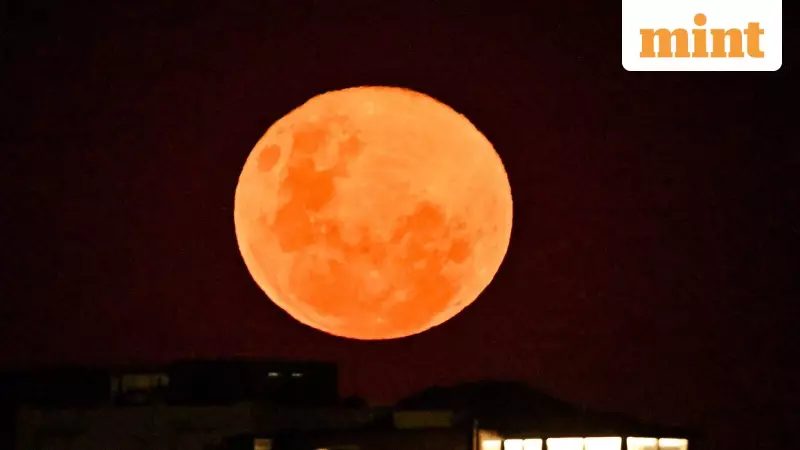
Skywatchers across India are in for a breathtaking celestial treat as the first full Moon of 2026, known as the Wolf Supermoon, promises to put on a dazzling display on the night of January 3. This supermoon will be significantly brighter and appear larger than a typical full Moon, offering a perfect start to the new year's astronomical calendar.
What Makes the January 2026 Moon a Supermoon?
A supermoon event occurs when a full Moon coincides with its closest orbital approach to Earth, a point called perigee. On January 3, 2026, the Moon will be approximately 362,000 kilometres from our planet. This proximity will cause it to appear up to 14% larger and shine as much as 30% brighter compared to when it is at its farthest point. While this size difference might be subtle to casual observers, the enhanced brightness will be unmistakable.
This particular full Moon gets an extra luminous boost, which astronomers refer to as a "triple boost." This phenomenon happens because the Earth is also near its closest point to the Sun around this time. The increased sunlight falling on the lunar surface gets reflected back to us, making the Wolf Supermoon one of the most brilliant full Moons of the entire year.

Folklore, Timing, and Visibility in India
The title "Wolf Moon" for January's full Moon originates from old folklore in the Northern Hemisphere. Traditions linked the cold, deep nights of midwinter to the haunting howls of wolves. While largely symbolic today, the name remains a poetic identifier for the year's first full Moon.
The Moon will reach the precise moment of peak fullness around 10:02–10:04 GMT on January 3. However, it will appear completely full to the naked eye for the nights of January 2 and 3. The best time for viewing and photography is during moonrise, when the Moon sits low on the eastern horizon. At this time, atmospheric scattering often paints it with a stunning warm yellow or orange hue.
Your Guide to Watching the Spectacle in India
Indian observers will have an excellent view of this event. The Wolf Supermoon will rise shortly after sunset, around 5:45–6:00 pm IST on January 3. It will remain visible throughout the night, setting at dawn on January 4, providing ample opportunity for enjoyment.
This is a naked-eye event, so no special equipment is needed. However, using binoculars or a telescope can enhance the view of lunar details. Sky enthusiasts should also look for a bright Jupiter shining nearby, creating a beautiful celestial pairing with the supermoon.
Mark your calendars for this standout lunar highlight of 2026. Find a clear spot away from city lights, look east after sunset, and witness the magnificent Wolf Supermoon illuminate the winter sky.






