

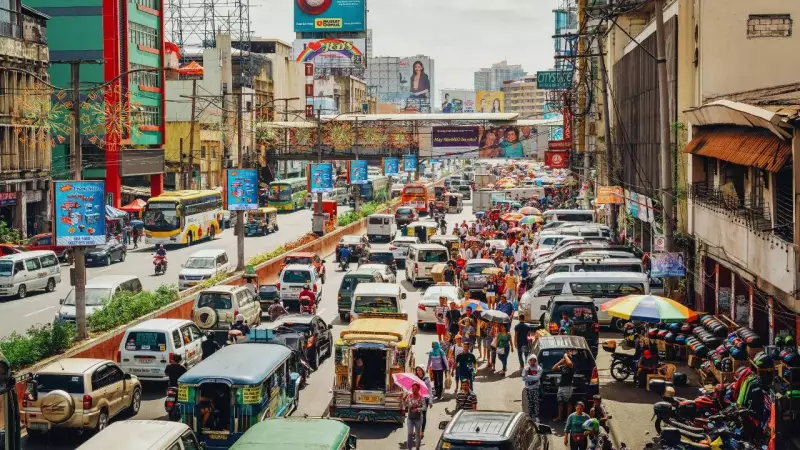
New data has highlighted the extreme pressure faced by urban centres across the globe, with a list of the world's most densely populated cities dominated by Asian metropolises. According to figures compiled from the World Population Review, the average global population density is a modest 14.7 people per square kilometre. However, this number skyrockets within city limits, creating a host of complex urban challenges.
The Global Density Challenge
Extremely high population density is rarely just a statistic; it translates into tangible daily struggles for millions. Cities topping this list commonly grapple with severe housing shortages, skyrocketing real estate prices, and overburdened public transport systems. Traffic congestion becomes a permanent feature, while water, sanitation, and waste management systems operate under constant strain. A significant reduction in open, green spaces is another common consequence, affecting the overall quality of life for residents.
The trend is particularly pronounced in Southeast and South Asia, where breakneck urbanisation has consistently outpaced the development of necessary infrastructure. This imbalance forces cities to adapt vertically and manage resources within severely constrained geographical footprints.

The Top 10: A Closer Look
The Philippines features prominently, claiming multiple spots on the list. Leading the world is its capital, Manila, with a staggering density of 119,600 persons per square mile. As the nation's political, economic, and cultural heart, Manila's limited land and rapid growth have resulted in extremely compact neighbourhoods where formal and informal settlements exist side-by-side.
It is followed by two other Philippine urban areas: Pateros (94,400 per sq mile), the smallest municipality in Metro Manila, and Mandaluyong (90,460 per sq mile), a hub of business and vertical growth. The list then moves to the Middle East, with Baghdad, Iraq (85,140 per sq mile), reflecting decades of rural migration and conflict-related displacement within its dense quarters and ageing infrastructure.
Mumbai: India's Crowded Financial Capital
India's entry is its financial powerhouse, Mumbai, ranking sixth with a density of 83,660 people per square mile. The city's unique geography, bounded by the Arabian Sea on three sides, has severely limited horizontal expansion. This has driven growth skywards and led to the proliferation of densely packed settlements. Mumbai's position on this list underscores its immense pull as a centre for employment and opportunity, attracting a continuous influx of people despite the spatial constraints.
The list continues with Dhaka, Bangladesh (75,290 per sq mile), one of the world's fastest-growing megacities driven by economic opportunity and climate-induced migration. Another Philippine city, Caloocan (72,490 per sq mile), part of Metro Manila's industrial-residential mix, also features.
Rounding out the top ten are Port-au-Prince, Haiti (70,950 per sq mile), facing challenges from internal migration; Bnei Brak, Israel (70,810 per sq mile), known for its large Ultra-Orthodox Jewish community and high birth rates; and the sole European entry, Levallois-Perret, France (68,460 per sq mile), a dense suburb of Paris.
What Extreme Density Means for the Future
The prevalence of Asian cities in this ranking points to a broader global pattern of rapid, concentrated urban growth. The data underscores the urgent need for innovative urban planning that goes beyond mere accommodation. Future strategies must focus on sustainable vertical development, massive investment in resilient public infrastructure, and the creation of integrated smart city solutions.

For cities like Mumbai, Manila, and Dhaka, managing density is not a future problem but a present-day crisis. The balance between economic vitality and livability will define their success in the coming decades. The list serves as a stark reminder that as the world's population becomes increasingly urban, the quality of that urban experience will depend heavily on how effectively we manage space, resources, and community needs in these intensely crowded environments.





