

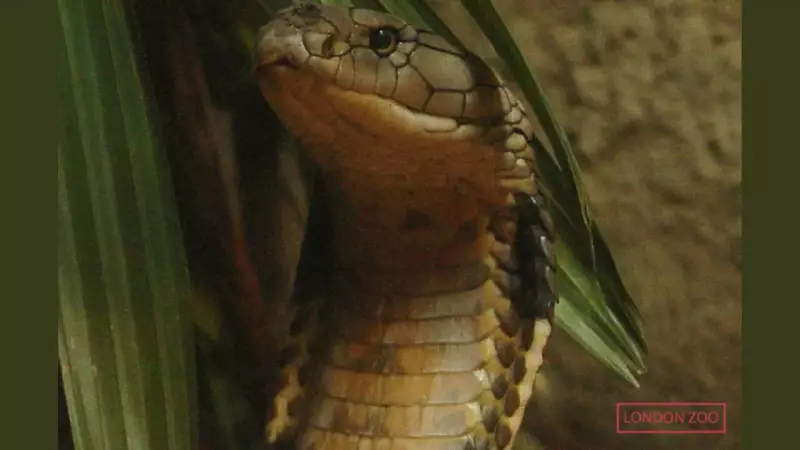
In the annals of natural history, the king cobra holds a unique and awe-inspiring position. This majestic serpent is not only a marvel of biology but also a creature whose story is unexpectedly intertwined with major events in human history. Its tale is one of record-breaking size, scientific curiosity, and a tragic loss that underscores the fragility of our understanding of the natural world.
The Unmatched Record of the King Cobra
The king cobra, scientifically named Ophiophagus hannah, is officially recognized as the longest venomous snake to have ever been reliably documented. Unlike many other venomous snakes that rely on ambush tactics, the king cobra is an active and formidable hunter, with a diet consisting primarily of other snakes. This specialized feeding behaviour is believed to contribute to its exceptionally long and powerful physique.
The record-holding individual was measured at well over five meters in length, a size that has never been conclusively surpassed. Multiple scientific reviews of historical records and preserved specimens have confirmed this specimen's unparalleled status. Its venom, a potent neurotoxin produced in large quantities, is powerful enough to kill a large animal with a single bite and remains a key subject for researchers studying the evolution of animal toxins.

From Asian Forests to a London Museum
The journey of this extraordinary snake from the wild to a scientific collection is a snapshot of early 20th-century natural history practices. During an era of colonial exploration, institutions eagerly sought rare and extreme examples of wildlife. This particular king cobra was captured in Southeast Asia and transported alive to Britain, where it became a star attraction at the London Zoo.
Its immense size made it a centrepiece for both public display and scientific study. Zoologists meticulously measured it to ensure accuracy and photographed it extensively to create a permanent visual record. Observations of its behaviour in captivity provided early insights into the species' temperament and feeding habits. Upon its death, the snake was carefully preserved and placed in a museum collection, intended to serve as an enduring physical reference for future generations of scientists.
A Casualty of War: The Blitz Destroys a Scientific Treasure
The assumption that this preserved knowledge would last forever was shattered during the Second World War. The sustained aerial bombing of London, known as the Blitz, caused devastation far beyond military targets. Cultural and scientific institutions were not spared.
The museum housing the prized king cobra specimen suffered a direct hit. In the ensuing destruction, the glass container holding the snake was shattered, its preserving fluids were lost, and the irreplaceable specimen was completely destroyed. Amidst the immense human tragedy of the war, the loss of a single snake drew little public attention. For science, however, it was a significant blow. The longest venomous snake on record ceased to exist as a physical object, surviving only in old photographs and written measurements.
The Lasting Impact on Science and Conservation
The destruction of this unique specimen continues to resonate today. Physical specimens allow scientists to re-examine old data with new technologies and verify historical claims. With this king cobra gone, those opportunities vanished permanently. Its recognition by authorities like Guinness World Records now relies solely on historical documentation, highlighting how fragile verification becomes without material evidence.
This loss has influenced modern preservation methods, promoting greater emphasis on duplication, digitisation, and global data sharing to safeguard knowledge. Furthermore, the story connects to contemporary conservation challenges. King cobras across Asia now face shrinking habitats and increasing conflict with humans, threatening a species that is often misunderstood and feared.
The fate of this record-breaking snake carries a profound lesson. It is a muted reminder of how easily knowledge, once considered secure, can be erased by forces entirely outside the realm of science—a poignant symbol of the delicate thread connecting discovery to memory.






