

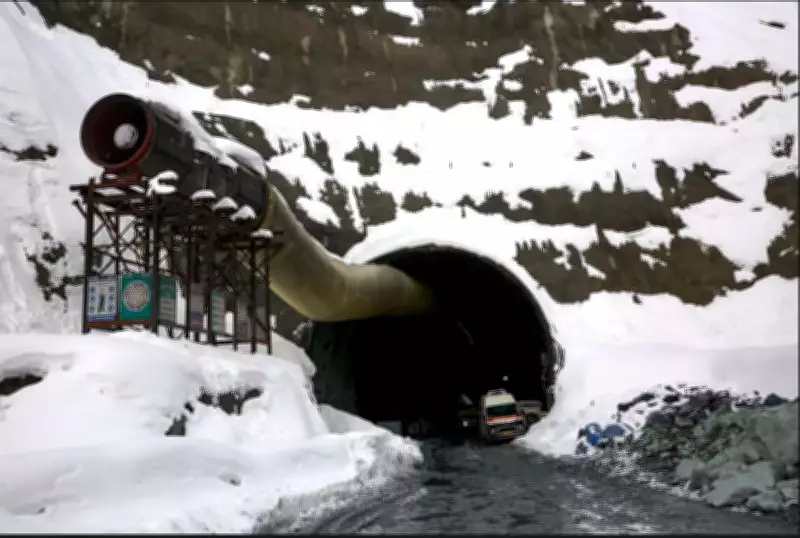
Zojila Tunnel Set for Historic Breakthrough on June 9
The Zojila Tunnel Project, one of India's most ambitious infrastructure endeavors, is poised to achieve a significant milestone with its final breakthrough scheduled for June 9. This event marks a defining moment in the construction of the 13.153-kilometer tunnel, which upon completion will become the world's longest single-tube bi-directional road tunnel at the highest altitude.
Located at an elevation of approximately 11,578 feet above sea level in the rugged Himalayas, the tunnel connects Baltal near Sonamarg in Jammu and Kashmir with Meenamarg in the Drass-Kargil region of Ladakh. The primary objective of this project is to provide all-weather connectivity between Srinagar and Ladakh by overcoming one of India's most formidable geographical barriers.
For decades, the Zojila Pass has been vulnerable to heavy snowfall, avalanches, and extreme winter conditions, often isolating Ladakh from the rest of the country for several months each year. The tunnel is expected to revolutionize transportation, logistics, tourism, economic activity, and strategic mobility across the region.

Engineering Feat by MEIL
The project is being executed by Megha Engineering & Infrastructures Limited (MEIL), which has undertaken the engineering challenge in one of the world's toughest mountain environments, according to a company statement. A key component supporting the main tunnel is the Nilgrar Tunnel system, comprising twin-tube tunnels that serve as a vital approach corridor to the Zojila main tunnel. Constructed through steep and rugged mountain terrain, these tunnels significantly improve accessibility between Sonamarg and Baltal while strengthening connectivity to the main tunnel alignment.
Advanced Safety Features
The project incorporates advanced avalanche protection measures, including cut-and-cover structures and safety walls designed to withstand the severe winter conditions of the Western Himalayas. These systems are intended to shield the corridor from heavy snow accumulation, avalanches, and extreme weather, ensuring year-round access for civilian and strategic movement.
Expected Benefits
Once operational, the Zojila Tunnel is expected to reduce travel disruptions, improve access to remote regions, enhance emergency response capabilities, facilitate economic growth, and strengthen national connectivity to Ladakh. The project is also anticipated to emerge as a symbol of India's growing expertise in high-altitude infrastructure and tunnel engineering.






