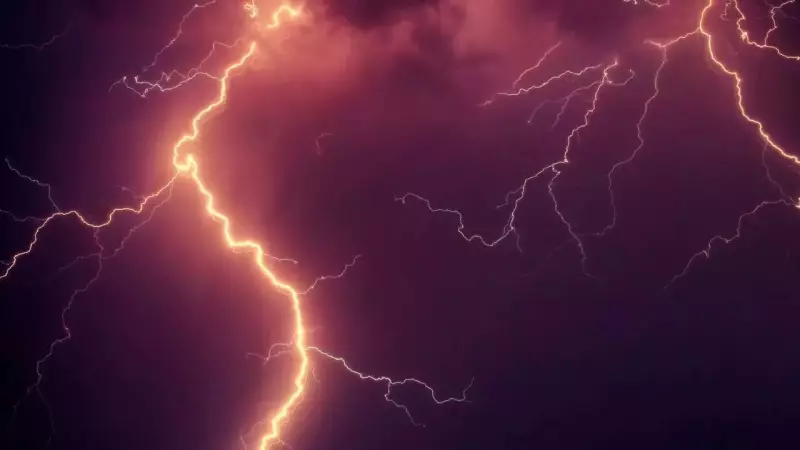
Lightning occupies a unique space in our experience of weather. It is both a common spectacle and a sudden, deadly hazard. A brilliant flash illuminates the landscape for an instant, vanishing before our eyes can fully adjust. Yet, its physical impact lingers in scorched trees, fried electronics, and, tragically, in human injury and loss. While modern detection networks can now track individual lightning bolts across vast regions, revealing once-invisible patterns, our personal responses to thunderstorms are still often governed by old sayings and untested beliefs passed down through generations.
The Science vs. The Sayings: Why Myths Persist
Many lightning myths are born from simple, visible cues—like seeking shelter under the tallest tree or hearing thunder close by. These offer easy explanations for a profoundly complex electrical phenomenon. Some myths gain strength from coincidence, where a safe outcome is mistakenly remembered as proof of a rule. Others are fragments of outdated advice, repeated until they sound like truth. Today, advanced tools like detailed lightning mapping, injury surveillance reports, and structural damage assessments allow scientists to test these long-held ideas against hard data. Analyses, including those cited by the Insurance Information Institute, consistently reveal a significant gap between popular belief and the measured behaviour of lightning.
Myth 1: Lightning Never Strikes the Same Place Twice
This is perhaps the most stubborn myth. The reality is that lightning frequently strikes the same spot repeatedly. Instrumented towers, skyscrapers, and even natural features like lone trees are often hit multiple times during a single storm or over successive seasons. Lightning is drawn to the path of least resistance and follows favourable electrical field conditions, which can remain stable around tall or well-grounded objects. A past strike does not make a location 'safe'; it remains vulnerable whenever atmospheric conditions align.

Myth 2: It Only Hits Tall or Isolated Objects
While height increases probability, it does not define the danger zone. A significant number of injuries and fatalities occur in open fields, on beaches, or on golf courses with no tall structures nearby. When lightning hits the ground, the electrical current radiates outward through the soil. This ground current can travel considerable distances and pass through a person's body without them being at the actual strike point.
Myth 3: Metal Attracts Lightning
Metal does not 'attract' lightning from the clouds in the way a magnet attracts iron. The initial strike path is determined by the electrical field between the cloud and ground. However, once a conductive path is established, metal provides an excellent route for the current to travel. This is why metal structures can survive repeated strikes—they efficiently channel the massive energy into the ground—while surrounding materials may be damaged.
Myth 4: Rubber Soles or Tyres Provide Protection
The immense voltage of a lightning bolt completely overwhelms everyday insulating materials like the rubber in shoes or car tyres. Footwear offers no meaningful protection against ground current. The safety inside a car during a storm comes from the metal frame, which acts as a Faraday cage, conducting the current around the occupants and into the ground. The tyres play a minimal role in this protective effect.
Myth 5: No Rain Means No Danger
Rainfall is a poor indicator of lightning risk. The anvil cloud of a thunderstorm can extend dozens of kilometres beyond the area where rain is falling. This cloud carries electrical charge capable of producing deadly 'bolt from the blue' strikes under clear skies. Lightning mapping consistently shows strikes occurring far outside the core rain area.
Myth 6: Lying Flat Reduces Risk
This advice is dangerously incorrect. When lightning strikes nearby, the ground current spreads across the surface. Lying down increases your body's contact area with the electrified ground, potentially allowing more current to flow through you. The safest action is to immediately seek a fully enclosed building or a hard-topped metal vehicle.

Myth 7: A Struck Person is Electrified and Dangerous to Touch
This fear has cost lives by delaying crucial first aid. A lightning victim does not retain an electrical charge. The human body cannot store the massive current of a lightning strike. Medical and emergency records confirm that touching a victim immediately after a strike poses no risk of electrocution to the helper. Immediate CPR and medical attention are critical.
Myth 8: Small Outdoor Shelters are Safe
Gazebos, bus stops, and picnic sheds offer cover from rain but little to no protection from lightning. Most lack proper grounding systems. They can be struck directly, or people inside can be injured by ground current or side flashes from nearby strikes. Being 'under cover' is not the same as being in a substantial, enclosed structure.
Myth 9: You're Safe Indoors from Plumbing and Appliances
While being inside a building is far safer than being outside, it does not grant absolute immunity. Lightning can enter a structure through external wiring, plumbing, or phone lines. Current can travel through metal pipes, taps, and corded electrical devices. There are documented injuries of people being shocked while bathing, washing hands, or using wired telephones during a storm.
Myth 10: 'Heat Lightning' is Harmless and Distant
'Heat lightning' is not a different type of lightning. It is simply ordinary lightning from a distant storm where the accompanying thunder is too far away to be heard. Sound can be absorbed by distance, terrain, or atmospheric layers. A silent flash on the horizon can still be part of a large storm system with active electrical discharges, some of which may be closer than they appear.
Staying Safe: Knowledge Over Myth
The persistence of these myths highlights a critical gap in public awareness. As our ability to detect and analyse lightning improves, so must our understanding of how to behave when it threatens. Relying on folklore can lead to fatal decisions. The core safety rules remain clear: when thunder roars, go indoors. Seek a substantial building or a closed metal vehicle, avoid plumbing and corded electronics, and wait at least 30 minutes after the last thunderclap before resuming outdoor activities. Replacing old sayings with science-backed knowledge is the most powerful tool for staying safe during India's storm seasons.